Home Gym Essentials: Books

IMG_7117

“What?!” I hear you say, “Books don’t belong in the gym!”

I say they do!

Before you blow thousands of dollars buying gear from Rogue, I say read a few good books on exercise and nutrition.  Whether it’s inspiration or education, you will gain much from reading these books.  Some are going to teach you about the science of diet & exercise, others about the philosophy behind movement & health. Some books are just great resources for exercises and training programs.

Have fun with books.  Be real: if it’s a boring book, you’re never going to read the whole thing. Find books that interest you, those are the books you’ll get the most use out of.  Some of my books are falling apart because I’ve flipped through them so many times.

There are no “must have” or “don’t bother” books in my book (sorry for the pun, I can’t help it).  Just read whatever books you think look cool, practice what you learn from them, and move on to another.  If you don’t know a ton about fitness already, you’ll probably get more value out of this self-education than you would from dropping your entire tax-return or stimulus check on shiny new gear you ordered online.

Machines You Move

The list of home gym essentials marches on…  Along with the blender, floor space, brain, body, something to hang from, and something to lift, now we have:

MACHINES

And not just any machines, we’re talking about machines that you move by your own power in order to elicit a cardiovascular response.

The first and most important cardio machine is–of course–your own body.  Running is the king of all cardio.  It’s primal, it’s natural, it’s functional, and it feels great.  Of course, it would be great if we could all just fly, but,

“If you can’t fly then run, if you can’t run then walk, if you can’t walk then crawl, but whatever you do you have to keep moving forward.”

– Martin Luther King Jr.

And if you’ve done all the crawling, walking, and running that you can handle, but you still can’t fly, then maybe it’s time to invest in a cardio machine for your home gym.

Here’s what I have:

IMG_7108
An ancient Concept 2 rowing machine.  Still does the same thing the new ones do.  Rows. 
IMG_7109
An equally ancient Schwinn Airdyne.  Does the same thing as an Assault AirBike, but breaks down less frequently (in my experience).
IMG_7110
Old, basic bicycles.  Because I have too many hobbies to put much money into any of them.  One ancient road-bike and one ragged mountain-bike get the job done. 

I also have a jump rope (speed rope) and a rowboat (dinghy), which I guess are technically also machines that I use my body to move for exercise.  The lawnmower, however, DOESN’T count.

So, when do you need to buy a cardio machine?

  • When you’re sport requires it
  • When it’s something you really love to do
  • When you absolutely can’t motivate yourself to do any other type of cardio

If you are an athlete or participant in a sport that uses a certain piece of equipment (like a bike for triathletes), then yeah, you absolutely gotta have one at home to practice with.  When you really love bicycling and it brings you great joy to do the activity, you also ought to own a bike.  When there is not one form of cardio that you could ever bring yourself to do (because you HATE running and you are BORED with ellipticals and you NEVER learned to swim!) except for the bike. Then, those are all good reasons to own a bike.  If, on the other hand, you don’t take part in any sports, and you do not enjoy riding bicycles, and you are perfectly happy hiking or walking the dogs for your cardio, then you DO NOT need to buy a bicycle, no matter how badly someone wants to sell it to you.

Now that you’ve done the “do I need it?” test, it’s time to talk about what you do with once you have it.

Unless you are an athlete who needs to develop top-end power or glycolytic endurance for their sport, then you do NOT need to:

  • Practice super-fast, pukey sprints
  • Do high-intensity interval training
  • Train “like the pros” from some YouTube video you found online

On the other hand, what we all need to do (even the pros), is spend a lot of time base-building with super-easy, long-distance aerobic work.  In other words, carve out a big chunk of time (like 1-2 hours if you can, or 30-45 minutes if you can’t), begin at an easy pace, and keep it at that pace the entire time.  Work on your ability to sustain and endure and tame your monkey-brain (that A.D.D. child deep inside).

This is the proper way to use your cardio machine, as an extension of your body, a body that you are training to be more reliable and enduring in all your day-to-day, aerobically-fueled activities.

Do it because you can.  Do it because it’s good for you.  And most of all, do it because it’s fun!

Praxis

Screen Shot 2020-05-15 at 9.21.30 AMWhen the internet first came into our schools and homes in the mid-90s, I used to get on that dial-up and type terms into AltaVista looking for something cool.  One of the first websites I remember becoming interested in was a punk rock site called “Praxis as Pedagogy”.  (Look those words up in the dictionary, that’s what I had to do.)

Basically, the guy’s point was that punk rock was a culture that was actually putting into practice the things that armchair revolutionaries and political theorists only talked about.  Do it yourself.  Demonstrate the culture you want to create and your actions will be a greater teaching instrument than any number of books or lectures.

In other words,

“Be the change that you wish to see in the world.”

– Mahatma Gandhi

I became fascinated by that idea of praxis, and dedicated to this approach to life: to learning by action, not theory.  This colored my entire approach to life in all the things I did thenceforth.  This is also what attracted me to all the various movements and activities that I became involved in: punk rock, hardcore, reggae, anarchism, vegan, straight-edge, MEChA, the IWW, hip-hop, zine making, graffiti writing, working-class skinhead culture, indie filmmaking, street fighting, entrepreneurship, CrossFit, paleo, backpacking, Yoga, and eventually Rastafari, Nyabinghi, and Orthodoxy.

Fitness as Praxis

So what is Fitness?  Many definitions have been proposed, but I believe that we each need to develop our own idea of what fitness is to us and then put that into practice.  Personally, I would define fitness as:

To survive, thrive, and grow physically, as well as mentally and spiritually. 

This is a beautiful idea that encompasses both health (survival) and vitality (thriving), as well as our dynamic development and improvement over time (growth), across all the dimensions of a human individual (mind, body, and spirit).  However, it is just an idea.  It means nothing if it is not put into action.

Fitness then, is actually the practice of staying alive and being alive–with energy and purpose–while becoming better (stronger, wiser, more mature).

So, fitness is a practice.  It is putting into action ideas about health (that it is better to prevent illness than it is to address symptoms of disease), about physicality (that the body becomes more useful and vital when it is challenged regularly), and about psychological, emotional, and social dimensions of human beings (that we think more clearly, feel better, and are better to others when we are physically vital).  All of these ideas have philosophical merit and physical evidence, but they are still just ideas until put into practice.

Fitness, then, is the application and use of this knowledge about what makes human existence better for yourself and for others through the practice of physical exercise, nutrition, and a healthy lifestyle.

Fitness is Praxis.

Through the practice of a fitness lifestyle, we learn what we are as human beings; and we learn what it takes to get the most out of this human experience and be better humans.  This is not the same kind of learning that comes from books (or the internet).  This is the kind of learning that only comes through doing.  Deep learning.  You will learn things about yourself that you are not able to put into words or convey to others.  You will learn unanticipated lessons. You don’t even know what kind of things you are going to learn until you go out there and do it.

So go move.  Move because you can and because you must and because it is the right thing to do.


Something to Lift

Next up on the list of essential home gym equipment: something heavy to lift.

I’ve already covered a few of my home gym basics, in no particular order:

  • A good blender (because controlling what you ingest is critical)
  • Some open floor space (because you could spend a lifetime developing your physical fitness with nothing more than this)
  • Your brain (because health & fitness are skillsets, made up of other skillsets, that all live in your brain)
  • Your body (because that’s the tool you’re doing all this work with and for)
  • Something to hang from (because that’s the first piece of external equipment you really need to consider)

Now let’s talk about lifting heavy stuff.

If you’re developing a home fitness routine, you need to understand that there are a few different categories of exercise to consider.  To put it into 3 big buckets, you have:

  1. Mobility
  2. Resistance
  3. Cardio

That’s the just the way I think about it, and other people might define these differently, but this over-simplification will work for our purposes today.

  • “Mobility” is movement ability–flexibility, coordination, balance, agility, and the like–having joints and tissues that work well and developing motor patterns to make them move the way you want them to.
  • “Resistance” is using gravity and loads to challenge your muscles (and bones and connective tissues) to be stronger, and to challenge your mitochondria to be better at producing energy for these strong and powerful activities.
  • “Cardio” is doing cyclical movements that move blood and oxygen, challenge respiration and circulation, and improve the function of the heart and lungs while also causing muscle and bone to adapt to doing more work.

Now, you can do all three of these things just with your bodyweight alone.  Stretching and Yoga (mobility) along with tough gymnastics stuff like handstand push-ups (resistance) and going for long jogs outside (cardio) would cover all your bases.

Bringing some external loads (= weighted implements) into the picture could conceivably be useful for any of the 3, but will have the most applications in your resistance training.  Simply put, lifting heavy stuff makes you stronger.

Here are some ideas for heavy stuff you can lift in a home gym setting:

IMG_7041

Rocks. Of course you know I’m going to start there.  Rocks of various sizes, shapes, and weights will give you a variety of challenges.  Great for hugging and doing squats.

IMG_7042

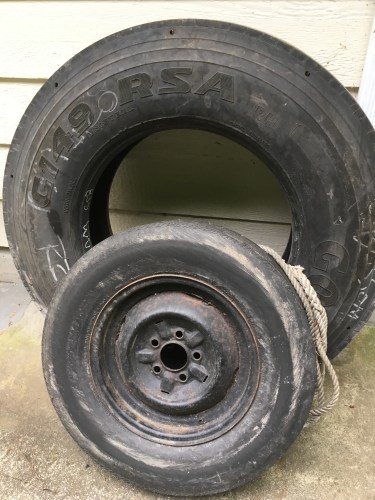
Tires.  Why buy stuff?  Tires of various sizes can be flipped, carried, hit with sledge hammers, or roped around your waist and dragged down the road.

IMG_7045

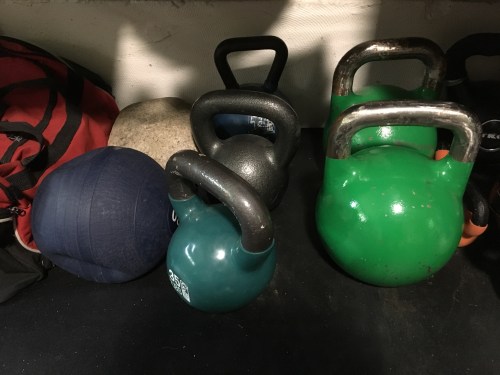
Kettlebells.  Incredibly versatile and you only need one to start.  Not just for swings.  Great for presses, rows, goblet squats, dynamic lifts (snatch, clean & jerk), and tying around your waist for weighted pull-ups.

IMG_7046

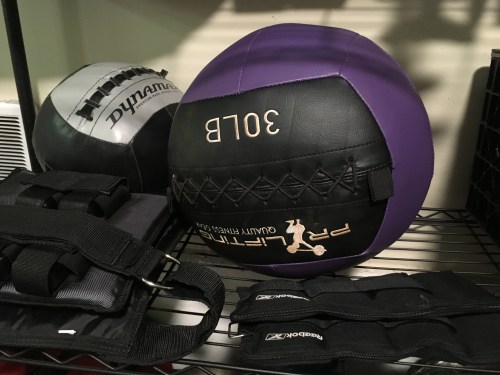
Medicine Balls. Hug them, squat them, press them, throw them.  A bit awkward, but cushy, so more friendly than a rock.

IMG_7044

Dumbbells.  Get a few pairs of these and all the possibilities open up to you.  Split squats and step-ups and presses and rows.  Curls, anyone?  Tricep extensions?

IMG_7047

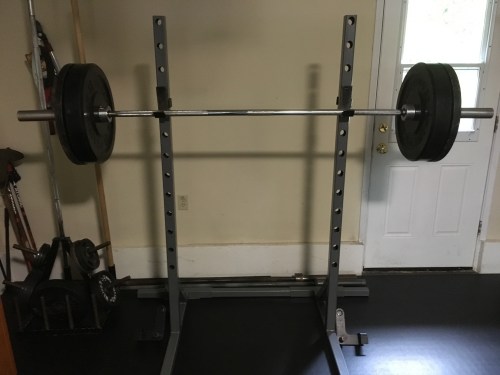
Plate-Loaded Barbell.  Because there is NO better way to challenge the human body with very heavy loads symmetrically and safely.  If you come up with something better, please let me know so I can invest and become a millionaire.

IMG_7040

Atlas Stones. Do you love watching those Strongman shows on TV & Netflix?  Now you can be one too!

IMG_7048

All The Other Stuff. Sandbags, ruck bags, slosh tubes, clubbells, sledge hammers, ankle weights, weight vests.  There’s tons of stuff you can buy or make yourself that would be great additions to your home gym collection.

Crush Your PT Test

Here’s something I’ve come to be known for and I love to do: preparing people for their military, fire, or law-enforcement PT test.

Step Into the Time Machine

If we go waaayy back, my brother and I were what I would call “paramilitary kids”.  We collected military surplus uniforms and equipment.  We read books and magazines and catalogs about strategy, tactics, weapons, and other tools of warcraft and spycraft.  We practiced all variety of skillsets that would only be valuable to a soldier, a private detective, or a terrorist (or a mercenary or bounty hunter, I guess).  We dug trenches and spider holes for fun.  Words like “bivouac” and “reconnoiter” were part of our daily vocabulary.

So, naturally, we did a lot of PT.  Push-ups, sit-ups, pull-ups, running.  These are a few of my favorite things.  I was never a big guy, but I could always do more pull-ups than anyone else I knew.  I could run all day.

Aspiring Marine

In my Junior year of high school, I decided I wanted to join the military.  I visited all the recruiters for Army, Navy, Air Force, Coast Guard, and Marines.  The only ones who impressed me were the Marines.  They had the highest physical standards.  They were the sharpest-dressed, the toughest, and the killy-est.  I wanted to be a Marine.

The Marines had 3 physical test at the time: the sit-up test, the pull-up test, and the run test.  I practiced all 3 frequently until I was confident that I could pass them easily.  Then I practiced them more until I could beat all the other kids in the local recruitment pool.  Then I practiced them even more until I believed that I would be the “honor man” at boot camp.  I could do 20 pull-ups the hard way, run 3 miles in 17 1/2 minutes, and do 90 sit-ups in a minute.

My parents refused to sign my early enlistment paperwork as a Junior, and then some other life complications happened when I was a Senior.  After high school, I changed my mind and I never did join the Marines.  But those skills stayed with me.

Fast Forward

Over the years I had a lot of friends go into and come out of the military.  I was always able to beat most of them at any physical test.  At some point I started giving people training advice and stepping into this role as a coach.

I began training folks in a CrossFit gym in 2012.  I think I was in Thailand in 2013 when someone first paid me money to help them prep for a PT test.  Then, back stateside in 2014, I worked with the local recruiters to get a batch of Army recruits up to speed.  We also did some work with the Navy recruiters.  At my health club job, I trained a number of military hopefuls, some Sheriff’s deputies, and firemen.  I started working with the Big Lake Fire Department to setup their own gym and get their folks in better shape.  Then the Mount Vernon Police Department started tapping me on the shoulder whenever they had someone on the fence.  I trained a number of new guys hoping to go to the police academy, as well as several officers who were struggling to pass their annual reviews.

I am still called on from time to time to prepare someone for a military or LEO PT test.  In fact, I have a client right now who is training in hopes of joining the police force.  I have developed a philosophy of how to pass the test.

A Philosophy of How to Pass the Test

  1. First, you must work on your mindset.  The PT test is NOT the hardest thing you are going to face in this job.  If you are seriously considering joining the military, fire department, or a law enforcement agency, then you must be prepared to enter a world where life and death are on the line every time you show up for work.  You will be tested frequently, and your first test is this.  If this test is scary or intimidating to you, then what are you doing?  Toughen up and get ready to crush it, or change your ambition.
  2. Second, you must concentrate on the specific skills within the test.  In a way, training for the PT test is much easier than training for most sports, because the tests are so well-defined and known. Look up the standards and points of performance for your specific test.  There will only be a few things tested and they all have a very narrow definition of acceptable reps and passing scores.  Once you understand these, you can train them aggressively and specifically.
  3. Third, you must exceed the standards of the test.  Remember, you are entering a world where you will have to save lives, kill bad guys, and not get killed yourself.  This test is just the bare minimum standard to be able to enter that world, it is not the measure of difficulty of the job itself.  So, you need to train yourself to the point where this test is easy, and then you’ll be able to go above and beyond it.  Push-ups, sit-ups, and running (or pull-ups or a swim, or whatever) need to be as easy for you as putting on your pants in the morning.  You need to eat push-ups and breathe sit-ups and run in your sleep.

There’s not really much more to it than that.  Some folks can do this on their own, but others need a coach.  Having been on both sides of this, I think it’s good for a lot of people to have a coach.

  • A coach can give you a reality check and slap some sense into you when you need it.
  • A coach can educate you about exercise performance and adaptation to training.
  • A coach can help you design a training plan and keep you accountable to it.
  • A coach can send you to a doctor or therapist if you actually have something physically wrong with you that is hampering your ability to do the work.
  • A coach can hold you to a higher standard.
  • A coach can run your through some practice tests.
  • A coach can help you get yourself to your goal.
  • And, if it turns out that this is really not the right thing for you, or is actually outside of your physical abilities, a coach can help you process that and identify a new goal.

If you are getting ready to crush your PT test, I hope this article was helpful to you.  If you need a coach to help you crush your PT test, you can click here to schedule a complimentary consultation with me.

A Place to Hang

IMG_7029.JPG

Talking essential gym equipment, this is the place I think everyone needs to start.  We’ve already covered the blender, floor space, a brain, and your body.  Now we’re getting into some actual, traditional exercise equipment.

Why does something to hang from go at the top of my list?  Simply put, pulling is a basic human movement pattern that is difficult to train without something to hang from.

There are a few primal movement patterns.  Different folks will have different lists, but I look at the basic patterns as:

  • Push
  • Pull
  • Level Change
  • Hinge
  • Hip Separation
  • Trunk Stabilization
  • Locomotion

You can train all of these with just your body, and of course you can get more complicated and advanced, adding various weights or pieces of equipment to challenge and progress these patterns.  Pulling is the only one that really needs an external object to accomplish.

  • You can push yourself off of the ground in a push-up or handstand push-up
  • You can train a level change with a basic air squat
  • You can practice the hinge by bowing or doing hip raises
  • You can do hip separation with a lunge, split squat, or stepping up onto the first step of a staircase
  • You can develop trunk stabilization with a simple plank hold
  • You can go for a walk to practice locomotion

But a pull is going to require at least a towel or rope and something to wrap them around, maybe a table edge to grip onto, a door frame, or an object like a sandbag, kettlebell, or dumbbell to use for rows.  The best option for pulling is simply something to hang off of.

Pulling exercises primarily train our grip (hand & forearm muscles), biceps, and back (lats, etc.), as well as basically all the muscles and connective tissues in the body that are supporting the strain of resisting gravity in the opposite direction from normal.  IT’S IMPORTANT.

So, let’s look at some great options for home equipment to hang from:

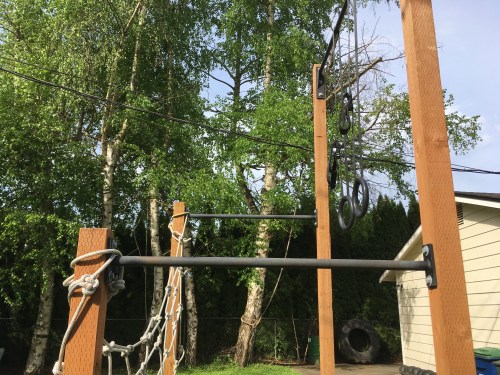
  1. Pull-up bar. The simplest, most basic form of hanging place.

IMG_7027.JPG

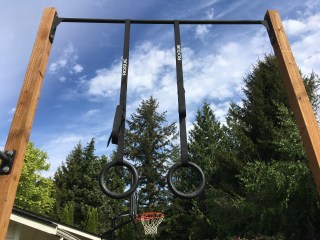
2. Gymnastic rings.  They need something to hang from themselves, but open up a world of possibilities.

IMG_7026.JPGIMG_7022.JPG


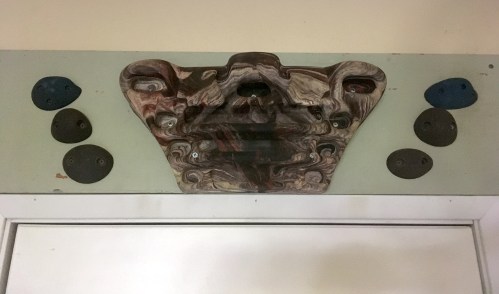
3. A rock-climbing hang board.  These mount above a doorway and give you tons of great options for varying your grip.

IMG_7023.JPG

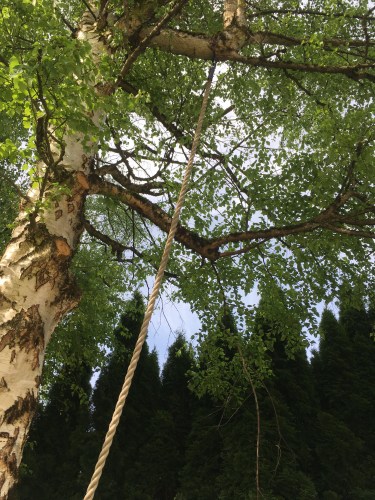
4. A rope. Because hanging doesn’t have to be from a horizontal object.

IMG_7024.JPG

5. A tree branch.  You don’t always have to buy something or build something.

IMG_7032.JPG

6. Aerial silks.  Time for some advanced, crazy stuff?  Tons of options here.

IMG_7020.JPG

7. Stall bars.  You get a regular pull-up bar, plus a bunch of bonus horizontal bars to play around with.

IMG_7021.JPG


The Most Important Piece of Equipment in the Gym

Earlier this week, I started a series of articles about essential home gym equipment.  My take is a bit different than those blogs that are trying to sell you a product or bias you towards a certain type of training.  I want to challenge you to think about the question a little bit differently.  I promise that I will get to talking about actual exercise equipment eventually, but for now, I started the series with:

But What’s the Most Important Tool in the Gym?

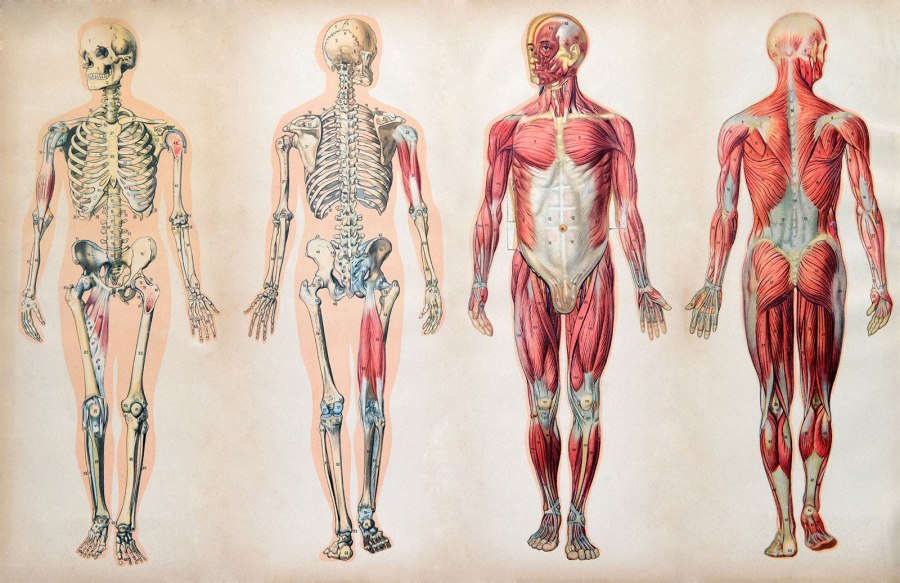
Think about what you’re doing in the gym.  You’re moving.  You’re practicing muscle contractions, coordinating joints, challenging heart rate and respiration.  All those systems you’re stimulating and training are part of one big system that is at the same time the target of training and the tool to accomplish it: the body.

anatomy-charts-human-body-muscle-systems-skeletal.jpg

The body IS the most important piece of equipment in the gym.  If you lack awareness of how to use this tool, any other exercise tool merely becomes another way to hurt yourself.  However, if you understand some things about how your body works, your other exercise tools become useful extensions of the body, or apparatus to challenge the body in new ways.

The human body is a big topic, and rather than write a long treatise on anatomy and physiology (which I’d probably screw up), I just want to highlight a few key points you should have in mind when following your home exercise program:

  • Your body is made up of a LOT of complex, underlying systems, such as your digestive system, nervous system, and endocrine system.  These systems need to be functioning very well before your body will be able to perform for you in training, or be able to adapt positively to training.
  • Your body is held together by a skeleton.  That skeleton is moved at the joints by muscles.  Muscles are connected to bones by tendons and bones are connected to bones by ligaments.  When we exercise, we’re using muscles to move or stabilize joints.  The result is to make our bones, muscles, tendons, and ligaments stronger.
  • Your brain sends signals through nerves to tell your muscles what to do.  The more times we’ve practiced doing a certain movement perfectly, the better our nervous system gets at telling our muscular system to repeat that pattern.  That’s why repetition and proper form are important.
  • Your body derives fuel for activity from various sources.  By challenging and training these fuel systems, you can improve the function of your heart, lungs, circulation, and cellular metabolism.
  • Your body needs nourishment, sleep, and a calm state in order to recover from training and regenerate itself in the ways intended by your training.  This is why what you do in the bedroom, in your mind and emotions, and in the kitchen, are arguably more important than what you do in the gym.

With a basic understanding of a few of these big ideas, you should be able to get the most out of your body in training.  Once you’re in touch with how your body works in training and how it responds to training, you’ll be better able to make use of those external pieces of exercise equipment.

Take Action

A couple of weeks ago, I wrote about Noticing, Explaining, and Prescribing.  Now, to round out this series on the NEPA framework, here is Actioning.

Actioning sometimes gets forgotten or glossed-over in discussions of this framework, as if noticing, explaining, and prescribing are the things we really have to be taught and be highly conscious of.  However, for many people, taking actioning is actually the hardest part.  If you’re highly analytical (as I am), it might come quite naturally to you to pick out little details and ponder the reasons behind them.  Doing something, on the other hand, is quite a different animal.

Luckily for me, I am also a man of action, so this entire framework works really well for me.  If you’re not, then taking action on these things might be the hard part.  Let’s talk about why taking action is actually the most important step.

Actioning = The Most Important Step

To revisit the NEPA framework, it goes like this:

  1. Noticing, leads to…
  2. Explaining, leads to…
  3. Prescribing, leads to…
  4. Actioning!

But, what we haven’t talked about yet is how Actioning leads to Noticing again.  This is where the whole thing comes full circle.  You’ve noticed something, you’ve investigated the “why” behind it, you’ve prescribed a new approach, and now you’re acting on that plan.  This is when you get to notice IF IT WORKED OR NOT.  Did you change the thing you were trying to change?

So, now we’re scientists.  To put this in the context of a scientific experiment, actioning is the actual EXPERIMENT part.  This is when you test your suppositions, gather data, measure results, and learn how your hypothesis stacked-up against reality.  The action step is where the real learning happens.

The action step is also where the actual long-term effects are felt.  Let’s say your noticing was that you aren’t as active as you used to be and you’re getting soft.  The explanation step yielded a 50% decrease in time at the gym over the past year.  Your prescription was to lift more weights.  Now, it is only in the actioning phase where you are able to lift those weights, increase that gym time again, and work away that softness.  You have to do the reps to get the results, which means that actioning is also the longest step of this framework, with the most hard work involved.

And what happens if you don’t do the actioning step?  The thing you were trying to change never changes.  The thing you noticed never goes away; the noticing never changes.  All the work you did to explain it and prescribe solutions was just a waste of time because you didn’t act on any of them.  So, what was the point then?

Don’t skimp on the Actioning step.  If it was worth complaining about, it was worth doing something about.  If you took the time to understand it, take the time to change it.  If it was important enough to make a plan, you had better implement that plan.

If you want to get something done: take action.


More Home Gym Essentials: a Brain

I think you can gather by now that my series of articles on “home gym essentials” is not like most you’ve seen.  This is a bit of a jab at those shopping list articles you usually find.  I think that success with a home exercise plan actually starts with much more basic things than the TRX straps or perfect push-up handles they’re trying to sell you.

The Brain

human-brain-0000.jpg

The brain is a critical exercise tool because you use it to think.

First, you’ll use it to think about why you want to exercise; what are you hoping to get out of an exercise habit and what makes you think you’ll be able to pull it off?  This whole endeavor begins with your mindset.  (See “Where to Start?”).  You have to have some faith in yourself, some drive and determination, and you have to have the willpower and discipline to pull it off.  You’ll also need a vision of what happens as a result of these new habits, which necessitates an acceptance of the possibility for change and growth (see my previous articles on giving yourself permission to change and developing a growth mindset).

Then, you’ll use it to think about all the things you can do.  Are you constrained to a 4’x6′ piece of floor real estate?  Good, constraints are excellent drivers of creativity.  Do you have a backyard?  A bike?  Trees?  Trails?  Parks? All these things open up new horizons for your exercise efforts.  Do you have some exercise equipment gathering dust?  Here’s an idea: pull that stuff out, clean it off, give it a home, and start using it.  (Or make some of your own home exercise equipment like I did.)  Your brain can also help you explore all the thing you can do with your body.  It isn’t a bad idea to simply do a head-to-toe inventory of all the ways your body moves, joint-by-joint and limb-by-limb.  It can be a fun little game to practice remembering every exercise movement and stretch you’ve ever learned in school, sports, or recreation.
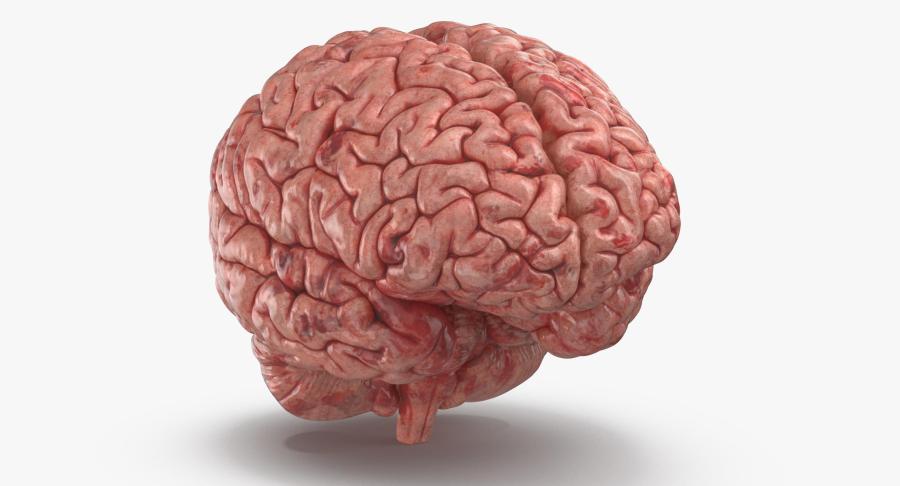
Finally, you’ll use your brain to think about how to organize and execute your new exercise plan.  What will it take to get you to do some intentional physical movement every day?  When will it happen?  And where?  (The scheduling exercise is helpful for this).  How will you split things up during the week?  How will you progress exercises over time?  This is where setting up a consultation with a professional who can give you a proper assessment and design programs is a good idea (and good consultations look at a lot more than just exercise).  Think about how you’ll be able to continue in this habit without getting bored, frustrated, or losing momentum.   Think about something you could do every day and start there, it doesn’t have to be a 1-hour weight training session.