More Essential Home-Gym Equipment: a Floor

IMG_7001.JPG

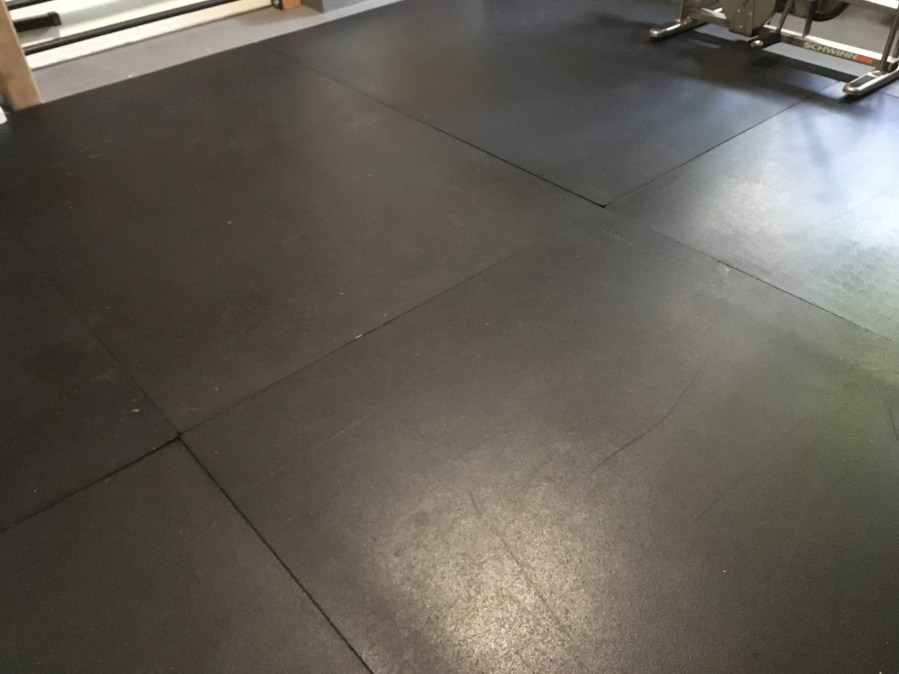
This one is a little bit tongue-in-cheek, but seriously, you get a lot done with just a little floor space.

I’ve said this often and even written it on this blog a couple times: a human being who is determined to exercise can do it ANYWHERE.  People get strong in jail cells, bunk houses, and bedrooms.  I have worked out on the roof of a little boat on the Mekong river and in tiny hotel rooms all over the world.

Think about all the things you can do with some good floor space:

  • Squats in many different flavors
  • A massive variety of lunges
  • Planks from every side and angle
  • All the push-ups
  • Any of thousands of Yoga poses
  • Ab stuff ’til you puke
  • A plethora of gymnastics isometrics
  • A cornucopia of stretches
  • Diverse kneeling exercises
  • Stupid amounts of handstand variations

Okay, that wasn’t fair.  I’m just using my mental thesaurus to find more ways to say, “lots”.  In all sincerity though, the only thing you need to start a home exercise habit is your own body and a little bit of good floor space.  This is the seed of your home gym: an open spot of floor.


Why the Blender is Essential Home Gym Equipment

IMG_6997.JPG

There aren’t many things that you “have” to have in a home gym, but I would say that a good blender is one of them. I have had dozens of blenders over the years and I use mine every day.  Throw away all your pre-made energy drinks, recovery drinks, or protein shakes, and just make your own!

Glass bodies are going to be the hardiest, and I happen to think things taste better from a glass vessel than they do from plastic.  I also prefer a blender base that only has 3 settings: on, off, pulse.  Less things to go wrong there, and I find the motors are generally more powerful in these.

Now, I’m also a protein powder snob, so your journey might start there: experimenting with different protein powders until you find what’s right for you.  This is probably the most critical element–the crux of the smoothie, if you will–so read the labels on those proteins.  Depending on your values, your personal goals, and the peculiarities of your own food tolerances and digestion, each person is going to do best with a different protein powder.  Some are animal-based, some are plant-based, most are made from either dairy or soy.  Some have added sugar, or artificial sweeteners, some are completely unsweetened.  Some come from organic ingredients.  Same are basically just a chemical sludge.  Read labels, taste test, and find your strike-zone.  Currently, I’m using the beef collagen peptides from Vital Proteins.

Your second major consideration for a post-exercise drink (after protein) is carbohydrates.  I prefer to use fresh fruit (usually a banana) & frozen berries because of the phytonutrients & fiber, rather than using a recovery powder, honey, or other form of sugar.  Again, this all depends on the individual, so powders and gels and syrups might be for you, but they’re not for me.  This ability to individualize your recipe and control every ingredient is what makes the blender an essential piece of home gym equipment.

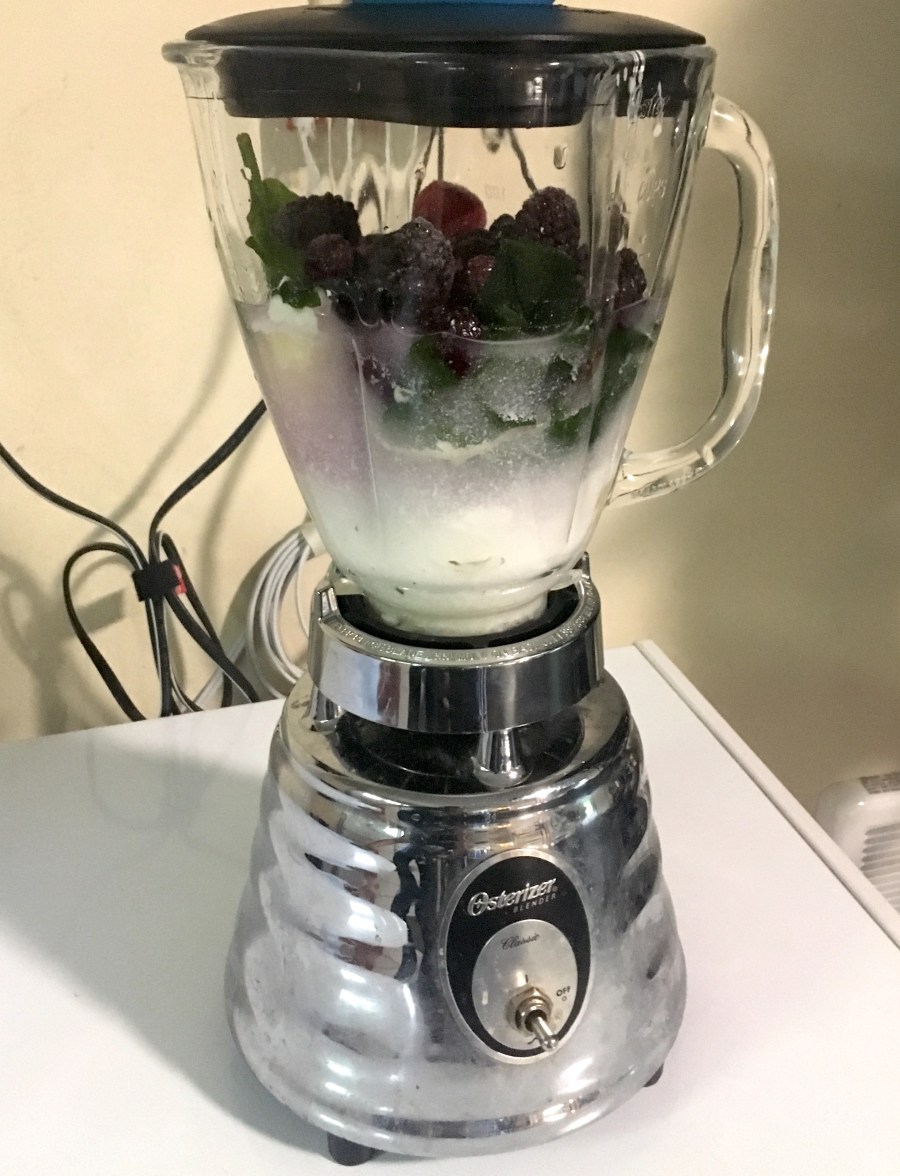
The smoothie-to-be in the picture is one of my favorite recipes: 2 cups water, 1/2 cup plain Greek yogurt, 2 scoops beef collagen peptides, 1 organic banana, a handful of frozen spinach, and a cup of frozen organic triple-berry blend (blueberries, blackberries, raspberries).  Now all that’s left to do is flip the switch!


Back to Basics

Right at the start of the COVID outbreak, before any of the lockdowns were imposed, I blew up a copy of these “Basic Lifestyle Guidelines” from OPEX into a poster for my gym wall.  I had no idea then how important these were going to become in the following weeks.

IMG_6804.JPG

Give them a good, thorough read.  These health considerations are more important than what diet you’re on or what intense exercise regime you’re following.  These are the foundation.

Now that I’m getting over whatever I had this week (that I thought was COVID and I thought was going to kill me), I’ve got to return to taking care of these basics.  Talk to you all again next week.

Test Results = Negative

Screen Shot 2020-04-29 at 2.31.26 PM.png

Good news as my test results came back negative yesterday.  I’m still really sick, and they did warn me about false negatives, so we’ll see how long this takes to get over.

Why blog about this?  I could just keep it all private, but…

  • I work in health & fitness, so I believe I have a responsibility to talk about health issues.
  • Someone else might be going through a similar experience, read this blog, then decide to go get tested for COVID, and that might save lives.
  • The person reading this blog might have some stubborn habits/beliefs like I used to have (ignoring symptoms, toughing it out, blanket mistrust of doctors, etc.) and reading this might help them realize the importance of looking into things.

At the end of the day, my goal is to save the world one healthy lifestyle at a time.  The imperative is for individuals to both survive and thrive, to grow, improve, and to nurture others.  Can’t do that if you’re sick and ignoring it, or if you’re unwilling to seek help when faced with a problem you do not understand and do not have the solutions for.

So, if you’re sick, go see the doctor!  Knowing something is better than knowing nothing at all.

Waiting for Results

IMG_1407.JPG

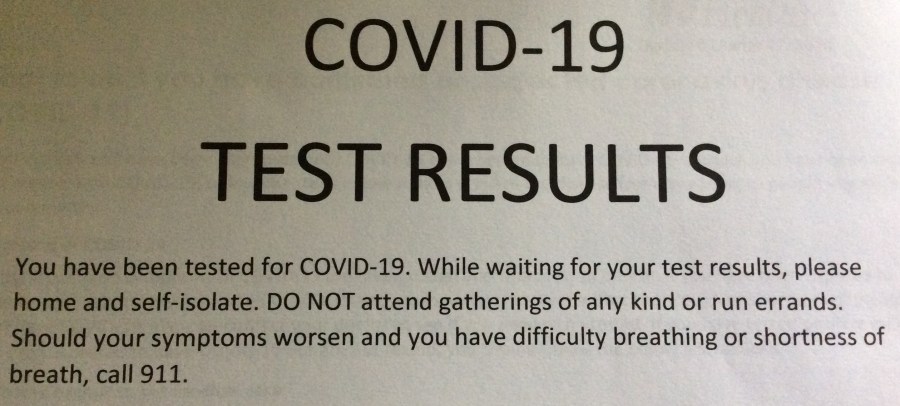
I was tested for COVID-19 yesterday.  I feel like garbage and I’m not gonna lie, this is pretty scary.  I will hear my results today.  In the meantime, I thought it could be helpful to others if I shared WHY I got tested and what the experience was like.

Why Did I Get Tested?

I woke up on Monday morning with a runny nose and a lot of phlegm in the back of my throat.  After a workout, shower, and breakfast, I felt great.  So, I went about my normal day.  But, there was only one problem: I kept getting sicker all day.  When Nathan (the 3-year-old) went down for his nap, I found myself also napping on the couch for about an hour (this was not in the plan).

By Monday night, I was miserable.  I wasn’t able to sleep for most of the night because of difficulty breathing and aches and pains throughout my body.  I stayed in bed as long as I could on Tuesday morning and when I woke up I could barely function.  I was coughing and struggling for breath.  I was lightheaded, dizzy, and confused.  I was accidentally closing windows on the computer when I was trying to open them, typing the wrong words, that kind of thing.  I spent most of the morning sleeping, then checked my temperature before and after lunch and had a fever both times.

So, of course, I did what any sick person at this time ought to do: I Googled, “should I get tested for COVID?”.  This led me to the CDC’s website, where I did the CDC Coronavirus Self-Checker.  This is a series of questions that helps determine whether or not you need to go get tested.  It told me I needed to call 911.

In the meantime, I was also on hold with my doctor’s office.  I got the triage nurse, who told me to drive to Skagit Valley’s “ARC” (Acute Respiratory Center), where they’re doing all the COVID-19 screenings & tests for our area.

I know that Googling suspected health problems looks somewhat hypochondriacal, and there are a lot of people who would have just toughed it out for a few more days before calling the doctor.  I used to be one of those people.  I used to be in the habit of ignoring health problems for days, weeks, even years.  But, guess what?  That was a bad idea.

I have now changed from someone who avoids the doctor at all costs (and doesn’t trust anything they say) to someone who is interested in health investigation and eager to hear what a highly-educated professional has to say.  In recent years, these health investigations have helped me address long-held concerns and improve my well being in a number of ways.  I now recommend thorough investigation of health concerns and interaction with a wide variety of health professionals, as appropriate.  So, of course, I’d have to follow my own advice.

What Was It Like?

Getting tested for COVID-19 was miserable and I wanted to turn back at every moment.  Even though it was all wrapped-up in precisely 1 hour from the time I left my house, it felt like an all-day ordeal.

I had to drive to Mount Vernon.  Only 20 minutes or so, but with that fever and headache and body aches, I felt like I could go barreling off the side of the road at any turn.  Once I arrived at the ARC, I had to figure out where to go.  Seems easy–find the front door–but I was highly disoriented and could not for the life of me figure out how to get into the place.  There was a tent in the parking lot and an older man there waiting for the nurse to come test him, but he wasn’t in any better shape than me and couldn’t tell me where to go.

Eventually the nurse walked me around to the front entrance of the building.  This is where it got scary: everyone in full-on hazmat suits like that scene in E.T.  The building was bare and grimy and reminded me more than anything of these old, abandoned offices at Magnuson Naval Base that we used as sets for a low-budget Werewolf movie I worked on in 2005.

At this point, I’m struggling to keep my eyes open and walk in a straight line.  Even though they’re moving pretty quickly for doctor’s office standards, I feel like I’m waiting forever to be moved from room to room.

I am led to a room, where I nurse takes my vitals and asks me lots of questions.  Later, an Advanced Registered Nurse Practitioner comes in and asks me all the same questions again, in more detail, before determining that I am eligible for the test.

Now, another nurse in a hazmat suit comes and leads me outside, all the way back to the tent in the parking lot that I started at.  There, the nurse who led me into the building at the beginning of this sits me down, verifies my name and birthday (I forgot to mention that every one of these people asked me for my name and birthday at least once, and I was actually struggling to come up with the answer), and unscrews a vial with the testing swab in it.

She tells me to tilt my head back and shoves this long swab up into my nose–ouch!–way further than I’d expected her to, and I jerk my head back to escape the pain.  It felt like she was poking my brain (might have been…). While I’m apologizing for jerking away like that and saying I’m ready for her to put it back in there, I guess she is telling me that we’re done.  It takes me a second to figure out that we’re done, but she tells me to wait to hear about results in about 24 hours, and to quarantine myself and my family in the meantime.

Then, I’m back in the car and on my way home.

Now What?

Now I just wait.  If my test results come back negative, I still need to quarantine until 3 days after the fevers subside.  If my test results come back positive, well there’ll be a longer quarantine then.

I actually slept well last night, and I don’t feel quite as bad as I did yesterday, but we’ll see.  Nothing to do now but wait for those results to come this afternoon.


Throwback to CrossFit North’s “Suffer on Saturday”

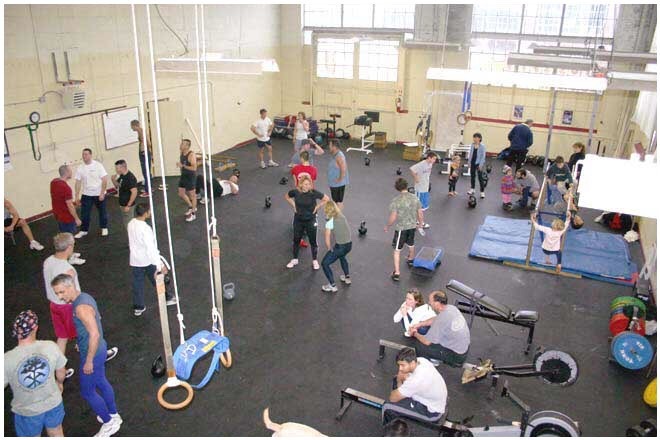
Suffer on Saturday April 2005.JPGThis is a photo that recently surface on the internet and brought back a lot of memories for me.  This is CrossFit North in Seattle’s Magnuson Park during a “Suffer on Saturday” event in April 2005.  I did not take the picture, credit for that has to go to Nancy Meenen.

This photo is significant to me for several reasons:

  • CrossFit North was the world’s first CrossFit affiliate, the vanguard of a fitness movement that has now impacted the entire world.
  • Suffer on Saturday was the first in-person competitive event for CrossFitters, giving birth to a new sport.
  • This room was where I attended Mike Burgener’s Olympic Weightlifting workshop, which was the first of the CrossFit Specialist Seminars.
  • This is where Dave Werner, Nick Nibbler, Nancy Meenen, Scott Takenaga, Michael Street, Carrie Klumpar, and Allison King taught me how to eat better, how to lift properly, how to think more clearly, and so many other things.
  • This is where I learned to do my first muscle-up (we did not kip).
  • This is where I smoked everyone on Helen in 6 1/2 minutes, probably holding a world record at the time (when no one cared about such things).
  • This is where I jumped onto a 48″ pommel horse, my personal best jump height.
  • This is where I used to sweep and mop the floors to pay for my membership dues.

You can see from the photo that early CrossFit brought together a lot of different types of people, that CrossFit gyms were nothing like regular gyms, and that it was something for all ages.

A lot has changed in the past 15 years, but some things still haven’t.  I’m just happy that I will always get to say, “I remember when CrossFit was cool.”

The Moral Imperatives of our Impending Doom

Is the Earth taking revenge on us?

Is God wrathful?

Is the human race doomed?

In the 21st century, it seems like we are attacked on all sides by diseases, and wars, and natural disasters; by ideological conflicts and economic crises.  Does this spell the end of humanity?  Are we all individually and collectively doomed?

I think this is a legitimate set of concerns.  It makes sense to be worried about questions like these.  It also makes sense to harbor these feelings and have these fears.  I mean look at what we’ve done:

  • We’ve expanded the population of humans and their impact on this planet to have negative effects on every level: from disruptions beneath the crust, to extinctions on the surface, and erosion of the very atmosphere that protects us from the void of space.  The Earth has every right to be mad at us.  And, as we heat things up, destroy the natural checks and balances in ecosystems, and spread our own unhygienic practices around ever-closer and ever-growing populations of humans, we’re bound to incubate and proliferate more and more deadly diseases.
  • We’ve collectively defied anything and everything that ANYONE’s religious traditions ever valued or warned about.  We’ve violated nature, disgraced ancestors, and ignored prophets. We’ve reveled in every kind of immoral and unethical practice and allowed these to run wild.  We’ve set vainglory, the accumulation of wealth, and pursuit of bodily pleasures at the apex of our ambitions.  Our politicians, business leaders, entertainment celebrities, even religious leaders–all the people we place at the peak of influence and renown–are some of our worst examples.  Any God you believe in must certainly be wrathful with us.
  • We’ve turned nation against nation and brother against brother.  We’ve stubbornly pursued the things that are harmful to ourselves and to others.  We’ve perfected the arts of death and destruction.  We’ve turned our hearts to fantasies while failing to care for the hungry and shelterless in our own communities.  Human beings are certainly behaving like a group heading willingly towards our own doom.

So, clearly, human beings are a problem; but what can we do about it?

We cannot stop being people, we cannot stop making more people, we cannot get rid of a bunch of people; for none of those choices is moral.  The only moral choice is to become better at being people. 

We’ve tried all the other options.  Recently.  They have only led to an increase in pain and suffering.  That is not right.  The moral imperative of a human being is to ensure their own survival and that of their species.

  • To self-destruct is a crime against all the past humans who have struggled so that you can be here.
  • To halt procreation is a crime against all the future humans who are to come.
  • To eliminate populations through genocide or eugenics or war is a crime against all the present humans who are to die, to watch their loved ones die, or take part in the killing.

The only choice we have is to improve.  Improve as individuals.  Improve as societies.  Improve as a species.

We must be better at living with ourselves.

We must be better at living with our families.

We must be better at living in our communities.

We must be better at living within our nations.

We must be better at living with those of other nations.

We must be better at living with the earth.

We need to take better care of every sphere of our existence and influence.  We have to do this individually and we have to do this with others and for others.  This is going to look differently to different people, and I’m not claiming to have all the answers here.  I’m just talking about the direction that we are compelled to follow: the only vision that makes any sense.  Come together, try harder, be bigger, do better.

EC17C47F-32A2-4FDB-983F-19D06611F8C6.JPG
Local, organic produce is certainly part of the solution.

Bring All Your Knowledge and Experience to Bear

This one is a follow-up to my recent blogs about Noticing and Explaining.  This one is about step three: Prescribing.  Remember the framework:

  1. Noticing
  2. Explaining
  3. Prescribing
  4. Actioning

Giving all credit where it’s due, I did not come up with this framework.  This comes from OPEX Fitness and I have been using it for several years.  It makes sense.  It works.  It’s worth thinking about and applying in your life.

Basically, we are doing NEPA all the time, thousands of times a day.  Picture this: You’re walking down the sidewalk.  Out of the corner of your eye you notice something sticky and nasty-looking on the sidewalk ahead of you.  Without much conscious thought, your brain processes the shape and color and explains it as un-scooped doggie droppings.  Your next subconscious thought is to prescribe a slight change in trajectory and gait to walk around it rather than stepping in it.  Now you take action by shifting your weight and steering around it.  That’s NEPA in action.  You didn’t step in it.  Now, that’s a new noticing and the NEPA cycle repeats.

It’s really just an analysis of how we process external stimuli from our world and turn it into our own actions.  It’s valuable because it can help us understand our own behaviors, build better habits, and make better choices.  It’s not always dog poop.  Sometimes it’s a lack of vegetables on your plate, or a certain expression on your spouse’s face.  Learning how to notice, explain, prescribe, and take action will help you address all these situations in a more mindful and effective manner.

Step 3 = Prescribing

When you get to step 3, you’ve already brought the thing to your attention and done some investigation to figure out what and why it is.  Now you’re coming up with a plan to address it.  This is where you bring all your knowledge and experiences to bear.

For a health & fitness coach like me, this means drawing on all my personal experience with sports, exercise, training, recovery, rehab, diets, food sourcing, meal planning, cooking, eating, health investigation, sleeping, healing, relationships, stress reduction, schedule management, and everything else that informs the work I do with my clients.  It also means drawing on all my education, from autodidactic obsessions to college courses and my university degree, as well as coaching certificates and nutrition training certificates.  Also, it means drawing on my knowledge of the individual: their history, goals, priorities, and personality.  I draw on all of this knowledge and experience to make a prescription for them that I hope is the best.

When you’re tackling problems in your own life, you’ll do the same.  The key is not to think of the problem too narrowly.  Just because you might not have any direct experience with the topic at hand, doesn’t mean the experience and knowledge you do have won’t serve you.  Many things in life share similar patterns with other things, have corollaries or analogs, or are basically scaled-up or scaled-down versions of other systems.

As Miyamoto Musashi said,

“If you know the way broadly, you will see it in all things.”

Prescribing is the act of devising a solution or course of action.  This is where you create strategy (big picture thinking).  This is where you come up with a plan.

From the smallest-scale problem to the largest, prescribing is a critical step.  If the prescription is aligned with a correct understanding (explanation), then we can only hope it leads to correct action.  Testing that hypothesis is the next step.

Find the Truth

Building on my recent post about Noticing, today I want to talk about Explaining.  Now, I’ll be the first to admit that it’s often easy to jump to a conclusion about why something happened.  In fact, that is pretty much always the easiest thing to do.  I mean, I know stuff, I’ve been around, I know this person or this situation, of course I know why they just did what they did.  But… usually I don’t.  Not really.  While my perceptions might be sharp and noticing might bring the important signals to my attention, my explanations for things are often wrong.  Or, if I take the time to separate from the situation and set aside my own desires or attachments, I might realize a completely different explanation that makes more sense and is more plausible.  However, even that cool-headed explanation might be wrong.  Rather than providing your own explanation for why something happened, it is better to investigate, and investigation will provide a truer understanding.

If you’re a scientist and you notice that the subject of your study (molecule, insect, planet, body part) behaved a certain way, you would probably look for precedent in a theory that explained that behavior, or maybe design an experiment that would test your own hypothesis about the thing you noticed.  It can’t hurt to look deeply and rigorously when seeking explanations for things that happened in your life as well.

  • Notice that someone had a snarky tone when they said something to you?  The best thing to do might be to ask them why.
  • Notice that there’s always a puddle of water in the same place on the bathroom floor?  Check above, behind, below, and to the side of it; Watch patterns of activity in that area through a 24-hour period.
  • Notice that the remote control isn’t working?  Check if it’s the batteries, and if not, take it apart to see if might be something loose or corroded inside.

You get the point.  People, places, things, even our own feelings: If you’ve noticed something, it’s probably important.  Now, if you can ask questions and seek data about the thing you’ve noticed, you’ll be better prepared to determine and execute an appropriate solution.  Let’s review the framework:

  1. Noticing
  2. Explaining
  3. Prescribing
  4. Actioning

If you don’t notice something–or ignore what you noticed–you can’t do anything about it.  So, we’re not fixing anything without that.  (See the previous post).  Now, if you don’t find a correct explanation for something, that will lead to you prescribing an incorrect solution, and taking wrong action.  This pattern just leads you back to noticing something’s wrong again, and if you again fail to find the correct explanation, then you’re just trying random approaches to the problem without success.

On the other hand, if you’ve noticed something and investigated deeply for an explanation of why it happened (and really peel back that onion, asking, “Why?” about each why you discover), then you might be much closer to a true understanding.  So, your prescription and action will be closer to a true solution.

So, don’t just respond off-the-cuff to the things you notice.  Seek the truth, deepen your understanding, come up with better answers, and improve the effectiveness of your actions.

The Vision

When I was still working at the health club, planning to set out on my own with my own fitness coaching business, I did a lot of business plan writing exercises.  One question that always comes up is, “What is the vision for your company?”  Other variations of this are, “What is the ‘why’ behind what you want to do?”, and, “What is your message?”  I was doing another business planning exercise this morning (I revisit this stuff from time to time), and the questions came up again.  So, I thought it would be good to share my answers here.

Why do I want to coach people on health & fitness?

I want to save the world one healthy lifestyle at a time.  

What are my principles as a coach?

  • Grow or die
  • Be the change you want to see in the world
  • Autonomy
  • Independence
  • Do-it-yourself
  • Investigate, practice, and understand
  • Do it your own way (serve the individual)
  • Each one teach one (serve the community)
  • Start with thoughts & ideas, then behaviors & habits, then expressions of physical fitness

What is my message?

Take responsibility for yourself, your surroundings, and your impact on the world.


Ok.  So these are the quick, off-the-cuff answers to these questions of meaning, but what is the larger vision?

The vision is to see one person at a time (starting with myself) realize their own value, appreciate their own agency, and begin to make choices that lead to them being smarter, wiser, healthier, more productive, and more valuable to themselves and to others.  Each person will develop a sense of ownership and responsibility over their own life and their immediate surroundings, then spread the love through serving and empowering others.  When we are each being the best version of ourselves, we will be better able to communicate honestly and respectfully with others, and therefore be able to understand one another better and accomplish greater social good.

So, that’s it in a nutshell:

Smart, Fit, and Clean = Saving the world one healthy lifestyle at a time.