Who Are You?

I’m talking this week about 7 important questions.  The first one, and possibly the MOST important, is, “who are you?”

Identity

The obvious answers to the question are about identity.  Think about the things that might be on your ID card, Driver’s License, or Passport: your name, where you’re from, when and where you were born.  These are important, but they’re just scratching the surface of who you are.

Identifying Characteristics

Another layer to this question is about identifying characteristics.  Are you male or female?  Black or white?  Tall or short?  What language do you speak?  What kind of work do you do?  These are all parts of who you are, and they are getting deeper, but there are still many more deeper layers to explore before you know–or I know–who you are.

Personality

Understanding your personality starts to take us deeper.  “I was always the class clown,” or, “whenever me and my friends get together, I’m always the ring-leader,” are both insights that help you understand who you are in a social context.  Your preferences (likes and dislikes) also tell us about your personality.  Do you love Mozart and despise pizza?  There must be some deep reasons behind that.

Self-Conception

Some of the most important work around knowing yourself is here on the question of self-conception.  How do you conceive of yourself?  How do you see yourself and your role in life here on earth in relation to existence, the universe, the entire human race, and all of human history?  What are you here to do?  Maybe it’s to be an artist, maybe it’s to be a janitor.  There’s no judgment here.  What’s important is that you are able to conceive of and state out loud who you are.

Motivations & Intentions

This gets to the real core question behind, “who are you?”, and that is, “what are you about?”  What are your values?  What drives you?  The answers to these questions are just as important to who you are as a name or a body is.  Understand your own motivations and intentions and be ready to re-state them to yourself or others at any moment.  This will keep you on a straight track to your purpose.

The 7 Most Important Questions (In My Work)

These may not be the 7 most important questions in the universe, but then again, they may be.  It depends on how you look at things.  They are certainly the 7 most important questions in my work.

It has taken me years to understand that my trade is not to teach a person how to live like someone else.  I’m not teaching people how to follow my rules or do things my way.  My trade is to teach them how to live like their self, the best version of their self.

What is the best version of you?  I want to help you to become it; to become that version who is the best version of yourself.  I am the guru who will teach you about health & fitness & life, and take you along that path step by step.

Answer these questions sincerely and your world will begin to change as you start down the path of purpose and meaning.  When you have purpose in your life, all the things your life & purpose require become effortless and easy.  When you lack purpose, everything in life is a hindrance or a chore.

Here are the questions.

  1. Who are you?
  2. What do you want to achieve?
  3. Why do you want to achieve it?
  4. When will you achieve it?
  5. Where will you achieve it?
  6. How will you achieve it?
  7. What are you going to do now?

I will talk more about each of these over the next week and a half.

All Power to All the People

This week, I’ve been talking about 3 big problems that face us as individuals, and hurt our collective well-being:

  1. Many people are living meaningless and dishonest lives.
  2. Many people are moving minimally and insufficiently.
  3. Many people are eating only for emotions and mouth pleasure.

In answer to these, I have proposed 3 solutions:

  1. Be your authentic self.
  2. Live your most vigorous life.
  3. Eat your own personalized diet.

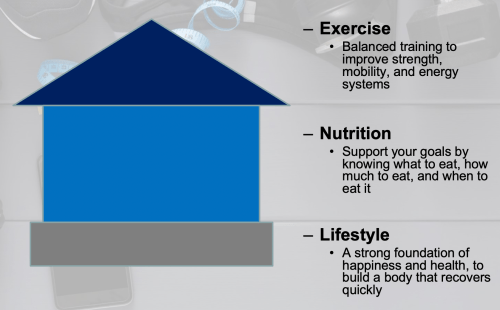
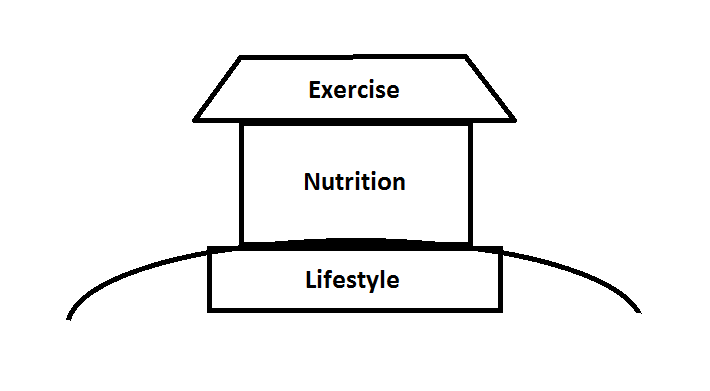
Each of these solutions addresses one of the elements that I work with people on in my health & fitness coaching business: Lifestyle, Exercise, and Nutrition.

Health House with labelsYou could also look at these solutions as addressing each of the three pillars that are in the name of my business: Smart (authentic self-knowledge), Fit (vigorous living), and Clean (personalized eating).

What I’m getting at here is that–while we are certainly beset by larger problems in the world in terms of pandemics, politics, and racial conflicts–these larger problems are also largely out of our control.  What we do have control over, and can thus be most effective at changing, are our personal spheres of influence: our lifestyles, activities, and nourishment.  And, in being better, healthier people, we will make the world a better, healthier place.

Like Huey P. Newton said,

“All power to all the people.”

My point is that empowerment of the common people–which is what we deserve, have fought to earn the right to, and now have the opportunity to achieve–is possible only through self-empowerment and self-betterment.  We have to make our beds, do our push-ups, eat our broccoli.  We have to understand who we are, what we are about, be honest about that, live to the fullest, work hard and achieve, eat for fuel and nourishment.

Like Huey Lewis said,

“It’s hip to be square.”


Eat Your Own Personalized Diet

Of the three topics I’m writing about this week, this one might seem less significant than the others; it doesn’t have the same flow or gravity to it as the other statements.  But, I would argue that it’s every bit as important and powerful as the others. It’s just something we haven’t heard much in the past, and maybe don’t yet understand the importance of.

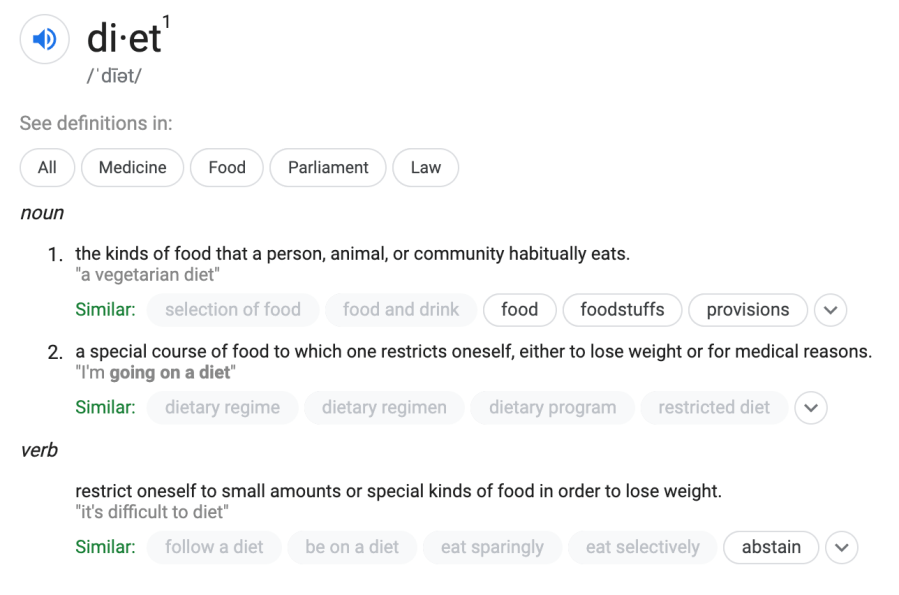
Screen Shot 2020-07-09 at 11.07.33 AM.pngSo, what does “diet” mean anyway?  In the deep past, it may have been a side-effect of food availability, or a secondary consideration behind much more immediate aspects of survival.  More recently, nutrition has become a cult or a religion for many people (see that word, ‘vegetarian,’ in the dictionary there?)  There’s also that bit about losing weight, which is the strongest connotation in most people’s minds these days.  For some people, their diet is an enemy in their personal weight struggle.  For others, it’s a product on the shelves, or maybe a tool towards a certain goal.  But, have you ever thought of your nutrition as being an integral part of who you are?

I am proposing a completely different approach to nutrition, where the fuels we put into the body–of what sort, how much, and at what time–are an expression of our personality, goals, and point of view.  You are what you eat, and not only on the level of muscle and other tissues that are grown from the building blocks in the foods you absorb, but also on the level of hormones, intercellular fluids, and nerve fibers.

This maxim, “Eat Your Own Personalized Diet,” is about individualized nutrition:

  • Understanding that each person needs their own diet that fits their body, and how this changes over time.
  • Determining what your body needs, doesn’t want, and does best with.
  • Eating differently for different goals and seasons.

So, the point it is that there is no one-size-fits-all diet.  There is no diet that works best for all people at all times.  All those fad diets and diet cults are potentially useful as learning experiences or tools for certain circumstances, but they are also potentially dangerous if you believe that they will always serve everyone.

In order to eat your own personalized diet, there are a few skills you need to learn how to practice.

Know what foods your body tolerates and does not tolerate well, and eat accordingly

This is something you can only learn by experimenting and paying attention.  Do you always get gas after drinking milk or eating ice cream?  Probably a good idea to eliminate dairy products for a couple of weeks and see if you feel better.  Maybe you have a lactose intolerance.  This is only one example.  Investigating potential food intolerances, allergies, and auto-immune conditions is very important.  These food aversions are unique to each individual, but if you don’t respect them you could be making yourself sick.  There are osteopaths, allopaths, naturopaths, chiropractors, and nutritionists who specialize in helping people figure this stuff out.  There are stacks of books about it. There are genetic tests, blood tests, and hormone tests.  If you discover that you’re someone whose body thrives on red meat and the nutrients it contains, maybe you have no business being a vegetarian.  Alternatively, you might discover that your body does best on a plant-based diet.  Do the work to find out the truth and then respect those discoveries.

Understand your current state and constantly make an effort to improve nutrition quality

The way you eat right now is the product of an entire lifetime of habits, preferences, and experiences.  Respect that.  You don’t need to throw it all away and jump straight into an emotionally-uncomfortable new way of eating.  What makes more sense–and is more realistic–is to make small changes and improvements constantly.  Take the example above, maybe you learn that you’re lactose intolerant, but your diet is filled with milk products.  You might start by removing one of those products entirely.  Maybe you’ll remove the others later.  Maybe you’ll allow yourself a little ice cream on cheat day, but cut all the other dairy entirely.  Eventually, you’ll get all that dairy out of your diet and feel great for it.  Don’t be in a rush, because rushing may cause you to yo-yo back into eating way too much of something that you wanted to eliminate. The same principle goes for eliminating processed foods, or sugars, or other lower-order foods:  respect your current state, keep the goal in the mind, and move the ball across the field one play at a time.

Understand your goals and what foods and drinks will help or hurt your goals

Goals change over time.  There may be a time in your life when your goal is to get bigger, but maybe another time the goal is to get smaller.  Maybe the goal is to relieve inflammation and pain in your body.  Maybe it’s to have better skin or more consistent energy levels.  All of these goals will require different nutritional changes.  All of these nutritional requirements will be different for different individuals.  So, the person who is already eating appropriately for their body’s tolerances, and they’ve already upped the quality of their food intake to a really high level (like, they only eat hunted, fished, and organically-farmed foods, drinking only spring water), still would need to make adjustments to their diet based on the goals they are currently pursuing.  This skill is all about recognizing that humans are dynamic organisms.  We change over time and our diet will also.  Knowing what nutrients do in your body will help you figure out what changes you need to make when your goals change.

These are some big concepts that will hopefully help you point your compass in the right direction.  If you need help navigating the details of this process, I’m always available for consultation and nutrition coaching.


Live Your Most Vigorous Life

I’m talking this week about 3 things, 3 big solutions to some prevalent problems of modern life:

  1. Be your authentic self.
  2. Live your most vigorous life.
  3. Eat your own personalized diet.

Today’s topic, living your most vigorous life, grows out of point one, being your authentic self.  Being your authentic self doesn’t mean letting yourself get away with things.  It means understanding yourself and expressing that understanding.  It means being honest with yourself and holding yourself accountable.  When we carry that over into the realm of physical activity, living your most vigorous life means doing the things you love and the things that most benefit you–often.

Your vigorous life is not the same as my vigorous life.  We enjoy different things, have different backgrounds and aptitudes.  Living vigorously for you will look different than it does for me.  The activities that fill your vigorous life will be different than my activities.  Nevertheless, there is a vigorous life to be lived by both of us.  There are purposeful activities to fill our time with, to take pleasure in, and to gain from.

Think about the activities that fill your day.  When you’re living your most vigorous life, you:

  • Are excited to wake up in the morning
  • Feel great about the things you’ve planned to do for the day
  • Enjoy your morning activities
  • Love to prepare and eat breakfast, lunch, and dinner
  • Take pleasure in your work
  • Handle your responsibilities enthusiastically
  • Make time for your hobbies
  • Delight in time with your family & friends
  • Deserve some time to relax
  • Relish the opportunity to sleep at the end of the day

When you love yourself, you love your own instincts and preferences.  So, do the things that inspire you and motivate you and fill you with joy.  If priorities are aligned and you respect your own unique profile of abilities, goals, and delights, you can live actively and adventurously with great enjoyment that benefits every cell in your body.

IMG_6650.JPG

Be Your Authentic Self

Here’s the problem: Many people are living meaningless and dishonest lives.  They don’t know who they are and what they’re about, so they don’t care about themselves and don’t treat themselves with care.  They know that there are problems in their life, but they hide from them and lie about them, so they are not able to do anything to solve them.

How many times have you seen these characteristics in another person and pointed them out?  I bet you point that finger everyday at some politician or celebrity, or even an old friend on social media.  Just remember, every time you point your finger, three fingers are pointed back at you.  In other words, you’re also guilty of the same thing on some level.  Pointing out another person’s flaws is just another way to avoid dealing with your own.

So, face the truth.  Start with an honest assessment of your own life.  Cultivate clarity of thought, without judgment.  Analyze where you’ve gone wrong and what you’ve done right.  Make it a habit.  This increased self-awareness will lead you to a greater respect for yourself and your own power.  Then you can use that power to organize your life into something you’re more proud of.

IMG_6804

In terms of the BLGs (which I’ve written about extensively), your honest self-assessment leads to a better understanding and expression of Purpose.  Then, with meaning in your life, you have more respect for Balance and the things that come with it (such as Recovery and Digestion).  Your authentic expression of purpose through a balanced life leads to the development of a Rhythm that respects your Energy, Hydration, and Sleep.

The ancient aphorism, “Know Thyself,” is therefore the first step, followed by, “Love Thyself,” and, “Be Thyself.”  Purpose leads to Balance and then to Rhythm.  These elements make up the foundation of that ‘health house’ I like to show people.  With these parts of your life addressed, you will be able to move on to thinking about exercise and diet because your body will be able to adapt to training and your mind will be able to handle discipline.

Screen Shot 2020-06-01 at 8.33.16 AM

3 Big Problems and 3 Big Solutions

IMG_6614.JPG

We had an awesome, long holiday-weekend and I hope you did too.  Friday was a hike up Goat Peak near Mazama (Eastern Washington).  Saturday was a 4th of July party in Sudden Valley and chilling on Lake Whatcom.  Sunday was taking boats out on Baker Lake.  We got to hike, ride bikes, swim, and row boats.  We saw all the reasons why Washington state in the summertime is one of the best places to be on Earth.

We also saw some silly stuff: online beefs, a surreal mini-protest, arguments over masks, and arguments over fireworks.  We had some great food and drink.  We also witnessed how some people get out of control with that good stuff.  I had a lot of long, interesting conversations.  I heard some people really spit truth.  I also heard some loud and misguided opinions passed off as facts.  I saw a bunch of crazy stuff posted on social media, and I saw some heart-warming photos of friends and strangers enjoying life.

There were many stories that I witnessed or experienced this long weekend, and I started writing them all out here, but they kind of detracted from the point that I want to make.  In observation and deep thought this weekend, I thought a lot about the problems that truly plague this country and I came up with 3 big ones that I want to address:

  1. Many people are living meaningless and dishonest lives.
  2. Many people are moving minimally and insufficiently.
  3. Many people are eating only for emotions and mouth pleasure.

I also spent a lot of time thinking about the solutions for these problems.  Then, pretending to be a physician, I came up with my own prescriptions for them:

  1. Be your authentic self.
  2. Live your most vigorous life.
  3. Eat your own personalized diet.

This week, I am going to write a blog about each of these three topics.  And then, at the end of the week I’ll sum it all up.  Watch this space.


Every Life Matters

One of my clients suggested this to me yesterday: can we say “every life matters” instead of “all lives matter”?

All Lives Matter

Here’s the thing with, “all lives matter,” it sounds like an argument against “black lives matter”.  It’s a true statement, but it’s also a reactionary statement against the statement, “black lives matter.”  Some people who are saying, “all lives matter,” are surely well-intentioned, and they simply don’t understand what, “black lives matter,” is supposed to mean.  It sounds like an inappropriate distinction to them.  However, there are also those who took up this chant in direct opposition to the BLM chant.

Black Lives Matter 

“Black lives matter,” is an important thing to say.  It may be misunderstood by some, but I understand it and I’ll gladly explain it as many times as I need to.  “Black lives matter,” is an argument against the statement that is implied by so much of American society–and forms the subtext of our history books and what we see on the news every day–the unspoken statement that “black lives don’t matter”.  Black lives definitely matter to the people that are living them, and to their loved ones, friends, and communities.  We simply won’t put up with any part of this society acting as if they don’t.  Not anymore.

Blue Lives Matter

I’ve also been talking about “blue lives matter”, which is an argument against the vilification of the police and calls for their deaths.  This too could be a well-intentioned statement, especially if you’re the family member of a police officer.  However, some people are certainly using this as a taunt or counter-message against the BLM protests.  You can see this in the “thin blue line” flag that re-casts America in back and white terms and interposes police between black and black.  Just try to tell me there’s no racial connotations there.

Every Life Matters

My client explained to me that, “every life matters,” would be a statement of the inherent dignity and worth of every human being.  I love it.  This is what I like to think of as the divinity of every human being.  This is why I can agree that black lives matter, that all lives matter, and that police lives matter.  If you’re saying one of these things, you’re not wrong in your statement, but if you’re saying it to try to counter or diminish what someone else is saying, then maybe you could be wrong.  The justification to say these things is that every life matters.  These statements only become wrong when they’re used to negate the importance of someone else’s life.  My client is right.  Every human life has dignity and worth.

If you agree that this statement is true, then go do the work.  Believing that every life matters means taking care of your own life and respecting others.  Go do your push-ups, and get to know your neighbor.  Be your best self, and cooperate with the people around you.  It is better to seek agreement than to pursue disagreement.

Is Protesting a Good Thing or a Bad Thing?

I feel like I ought to explain myself.  Why am I blogging about the protests?  Why has the focus of my health & fitness blog completely shifted in the past few weeks to talk about these high-profile murders, about race in America, and about police reforms?  Are protests even something that deserve our attention?

When the George Floyd protests broke out a month ago, I started writing about lifestyle.  I knew that there were a lot of different sides forming up around the issues being protested about, and I wanted to help everyone on all the sides be more mentally acute so they could make better decisions and communicate more clearly.  Then I went on to write explicitly about George and others like him, about race in America, and about the police.  I did this because the persistence of the protestors and the realities of George Floyd’s case and others made me realize that I had to say something about what was going on. Being silent would not be healthy.

I talk to a lot of different people every day and I am met with radically different perspectives.  Some of them just implicitly assume that the protests are a good thing, are necessary, and are effective.  Others simply assume that the protests (and possibly all protests in general) are negative, destructive, and misguided.  I want to talk about why I think protests can be both.
FirstAmendment01.jpg

As American as Apple Pie

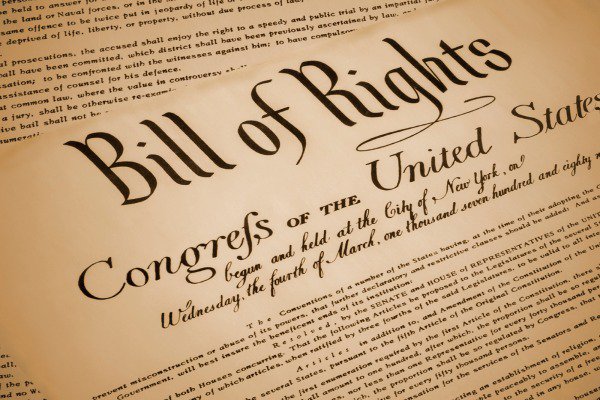
The United States of America is based on protests, and it is an important part of our culture.  It goes back to literally the first ‘protests’, the Protestant Reformation in Europe.  Many of those people came to this land to flee persecution.  The culture of protest persisted here and the American Revolution is a story that begins with protests about taxation and a lack of representation in government.  Our Bill of Rights secured our rights to speech and to assembly, and all the major reforms of our society have come about this way.  Abolitionists protested for the end of slavery.  Suffragettes protested for women to have the vote.  Prohibitionists protested to ban alcohol and anti-prohibitionists protested to legalize alcohol.

Protesting is a right in this country, and an important one.  It is part of the checks and balances of our society that keep us accountable to one another and keep our government and marketplace institutions accountable to the will of the people.  many of the liberties we take for granted are the result of protest.  Some of the same people who mocked the protests against COVID-19 lockdowns were out in the streets a week later protesting about George Floyd, and some of the people who mocked the George Floyd protestors were out there protesting against the government’s COVID-19 regulations a week earlier.  I think both sides were doing their duty, not in mocking each other, but in raising their voices against what they felt was wrong.

Everything is Political

I used to be a protestor.  When I was a teenager, I would regularly march in protests for or against one cause or another.  I felt that this was important.  We all contribute to the culture(s) we live in, and if the culture around you is sending one message–a message that you disagree with and think is wrong–it is important to assemble and raise your voice to put the counter-message out into the culture.  This is why I marched agains police brutality in the 90s after being beaten up by cops, or marched for migrant workers’ rights after working in the fields and seeing how some of my Mexican neighbors lived.  Protesting together is a form of telling, and sharing, the truth.

I also encountered the idea of personal protest, taking your protest out of the realms of speech and assembly and into your lifestyle and purchasing decisions.  For example, when I was a vegan, I protested animal cruelty by boycotting Proctor & Gamble, McDonald’s, and leather shoes.  Through this experience, I learned that it was more important to change my own actions, my own thought patterns, and my own purchasing decisions than it was to try to change other people’s minds with loud and confrontational speech.  I learned that every choice we make is political, in a manner of speaking.  These forms of protest, the personal kind, were much more effective than marching in the street.  They were more real because they were things I lived 24/7/365, and that was more impactful than mere words.

More Harm Than Good?

I also saw the destructive side of protests.  A protest is a potential flashpoint, a place where trouble–such as violence–can flare up.  This is because protests, even well-meaning and peaceful protests, attract the attention of a variety of bad actors.  I have seen this with my eyes and lived amongst the protest culture, so I am not making this up or repeating something I read online.  Vandals, gangs, extremist groups, covert operatives–various figures who want to take advantage of crowds, cause violence, or discredit one cause or another–are drawn to these gatherings to make trouble.  Police crowd control efforts can also turn into an incitement to riot, whether intentionally or accidentally.

Apart from bad actors, there are also the dangers of the hypocrite and the reactionary.  The hypocrite is someone who represents your cause loudly, but is not a good example in themself.  They may be so obviously flawed that they give your cause a bad name and actually turn people away from it.  Then there’s the reactionary, someone who sees your protest and feels so vehemently opposed that they start to put their own counter-action into high gear.  Sometimes these factors make the thing that is being protested against even more powerful and entrenched in the long-run.

Be Careful Pointing Fingers

Ok, so protests are happening and I want to talk about it.  Protests are a civil right and an important legacy of our culture.  Protest is a voice of the people that can be embodied in every choice we make.  Protests can also turn bad and discredit your cause, or strengthen the opposition.  So, where do I stand on protests at the end of the day?

One of the most important things I have learned in life is that it is more important to change yourself than to try to change other people.  Every time you point your finger at someone, you’ve got 3 more fingers pointing back at you.  Telling someone they’ve got to change is usually met with resistance, and it’s a resistance you cannot overcome because you cannot get inside people and force them to change their minds.  Changing yourself is also met with resistance, but it is a resistance you can overcome if the change is important enough to you.  You can do that hard work of change, and be an example, and speak about it with truth and candor.

So, I think protests are good and important.  I also think protests are potentially dangerous and damaging.  If the protest doesn’t carry on into your own thoughts and actions, then it was a waste of time and energy.  Be careful pointing fingers.  Sometimes they need to be pointed, but remember to internalize the change your are calling out for.  Speak up in every setting, not just in the protest.  Make sure you’re not being a hypocrite.  And, if someone else’s protest upsets you, make sure you ask yourself why and spend some time working on how to clearly communicate your own response.

Do Push-Ups Because Blue Lives Matter

Care about the police and want to help them out?  Do push-ups.  I’ll tell you all about it.

Screen Shot 2020-07-01 at 10.05.02 AMWe Need Better Police

Can we all agree that we need a better police force in this country?  I have been on the receiving end of police brutality, and I have also worked a lot with police officers.  I will tell you from my own thoroughly-experienced perspective that we do need better police officers, police departments, and a better institution of policing in general.  I care about police and I know from talking to them that the good ones devote their lives to being better officers and creating a better police culture.

I wrote yesterday about how I use “push-ups” as a code word for getting your life together.  If you’re a cop, I think one of the best places to start is with actual push-ups.  Addressing your own physical fitness will prepare you to be more useful as a human, and more confident in high stakes situations.  This will help you make better decisions when they count the most.  Addressing your own physical fitness will also push you to address your underlying physiology and mentality.  I’ve spoken before about placing lifestyle and nutrition higher in your hierarchy of priorities than exercise itself.  If cops do this work on their own mental and physical health, we will go a long way towards having better police and improving police as an institution.

We Need A Better Recruitment Pool For Police

I work with law enforcement officers frequently and I can tell you that they struggle to find qualified recruits.  We have a population in the United States that is gradually becoming weaker, sicker, and less useful.  Big problem; hard to identify the causes.  I would propose that it has a lot to do with technological distractions, a culture that values commerce over utility, and a ‘nerfed’ world for children with less PE and less playtime than in the past.

If we want to see better police on the streets, doing a better job and honoring their profession–truly serving their communities–then we need to start by providing them with a better recruitment pool.  So do your darn push-ups.  Encourage the growth of physical culture.  Turn off the TV or video games and do something outside.  If you can set an example to your friends and your neighbors and your kids, maybe we can turn this thing around and create a world where the police force doesn’t have to dredge the bottom of the barrel for new recruits.

We Need Better People

Third reason to do push-ups if you care about police: We need to be fitter, healthier, better people.  We need to police ourselves so that we don’t require so much policing or depend upon police so much.  I mean, think about it, if you’re a mess and your life is a mess and your home is a mess, your friends are a mess, what kind of activities are you getting into?  I can say this from experience, when you’re a mess, you’re a burden or even a threat to society, and sometimes the police are going to get called in.

I know the people from the CHAZ/CHOP in Seattle have been talking about living in a world without police.  That’s a utopian, idealistic vision.  It would be beautiful if we never needed police because we never did anything wrong to each other.  No crime; no cops.  However, removing police will not remove the need for police.  To remove the need for police, we actually need to be better people.  That starts with you getting your life together and building a better relationship between yourself and your society.

Do your push-ups.