Assessing in Fitness

I’m putting myself through a 2-week cycle of assessments right now and reflecting on the history of this concept. We didn’t always know how to assess fitness. Here’s some history for you.

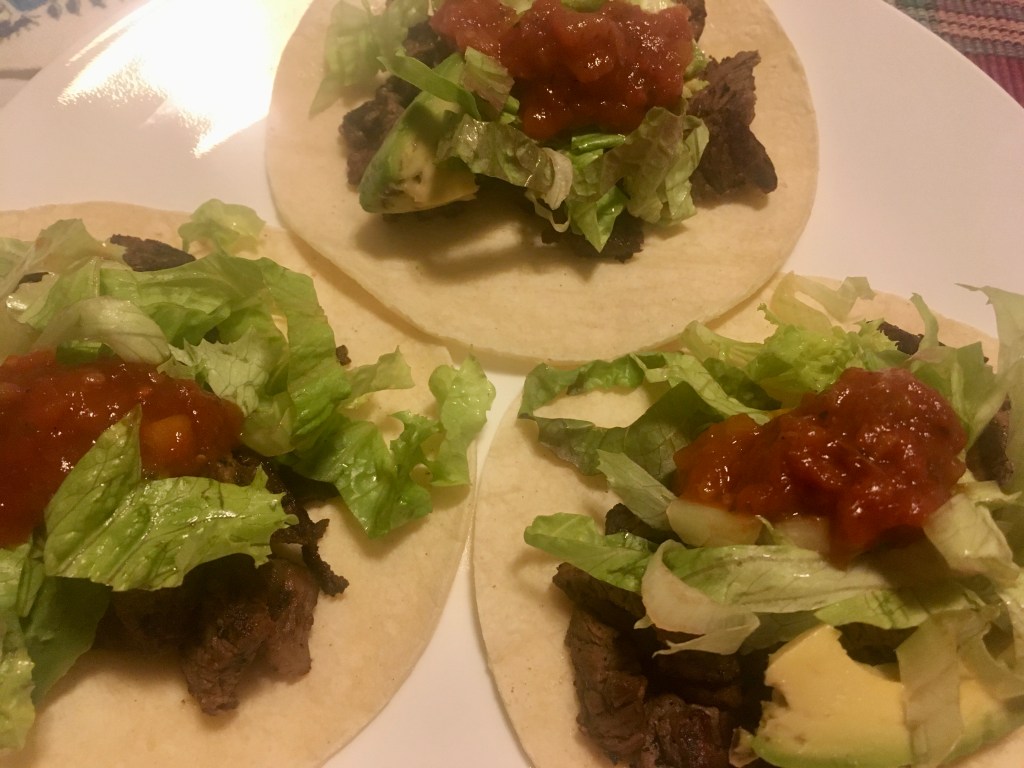
One of the first people to attempt a holistic system of fitness assessments was Dave Werner. These photos are from his first system of “Skill Levels” released in 2006. Before that time, the ideas of fitness and assessments weren’t really operating in the same sphere. They were like things from different worlds that didn’t have any relationship to each other.

Fitness

Fitness practice is actually very old, but our ideas about it (talking about it, defining it, practicing it as such) are actually very new. Originally, people just did physical things to survive. Perhaps we found some sense of thriving in that. Later, strength and conditioning practices were done by warriors & soldiers preparing for battle. At some time in history, athletes emerged, who practiced physical feats for competitions, points, and awards.

In the 20th century, we saw the rise of the modern Olympic Games, the proliferation of sports and training techniques, the emergence of gyms and health clubs, and the widespread availability of home exercise equipment. Out of this milieu emerged the fitness nuts (like me!) who were into cross-training. Our concept of fitness was based on practicing a lot of different things, such as weightlifting, gymnastics, and sprinting. We started to say that “fitness” meant being well-rounded, capable in a lot of different realms of sport and physical expression. Truthfully, we were echoing very ancient ideas about the “golden mean” (Google it).

Assessments

At this point in the story, assessments were very rudimentary, if they existed at all. The concept of assessment was practiced differently in every sport or physical discipline. A 50m sprinter would assess their 50m sprint time, and maybe their coach would assess other aspects of the physical function of their body as it pertained to sprinting, but they wouldn’t care about their 1-rep max clean & jerk! Likewise, an Olympic Weightlifter did not care about his 50m sprint. Doctors and physical therapists were also assessing range-of-motion and aspects of strength as they related to basic physical function, like being able to walk after a car accident.

However, assessment in “fitness” was constrained to things like measuring the diameter of your biceps and stepping on a scale. When we started defining “functional fitness” and practicing multiple disciplines, we needed some way to measure what we were trying to achieve. It wasn’t related to physique or BMI was all about physical abilities. How would we know if we were keeping these things in a proper balance? How would we quantify if we were actually any good at anything? That’s where Dave stepped in with his Skill Levels.

Fitness Assessments

The Skill Levels conceptualized our physical abilities in 6 categories: Hips, Push, Pull, Core, Work, Speed. The first four–Hips, Push, Pull, and Core–were looking at strength abilities in different basic movement patterns or areas of the body. Work and Speed were looking at metabolic aspects. The idea was to simplify the entirety of strength & conditioning into a few simple categories, then to create a system of measurements within these.

He said he was basing this on martial arts. Like, in Karate, you have to test to gain a belt, showing that you’ve learned the fundamentals of the level that you’re on before you move up to the next level. This was Dave’s idea with the Skill Levels. Master the Level 1 stuff, then master Level 2, then Level 3. If you look at mine up there, my Level 4 bench press, rope climb, and overhead squat were way out of balance when compared to my Level 1 kettlebell swings. This was the assessment’s way of telling me to work on my work capacity with kettlebell exercises because that was my weak spot.

Today

This idea had legs, and nowadays there are numerous systems of holistic functional fitness assessments out there. We’ve become much more sophisticated at this and I’ve now learned and practiced several of these systems. It’s all about balance in the fundamentals, then developing with balance into the harder and more advanced stuff. Assessment for anyone starts in the same place, but what is relevant to a working mom is not the same stuff that’s relevant to a competitive athlete (unless they are the same person).

If you come to work with me as a client, I’m not going to make you do the stuff on Dave’s chart. I’m not gonna send you climbing up a rope (unless you really want to). What I will do is take a look at some basic movement patterns, see how you squat and lunge and if you can touch your toes, watch how your shoulders move, and definitely test how long you can plank! The idea that we’re looking at a variety of basic abilities is still there, as well as the idea of testing fundamental levels of function. The first goal is balance in the basics. After that, the sky is the limit and the journey is up to you.

Why Do I Mess With Yoga?

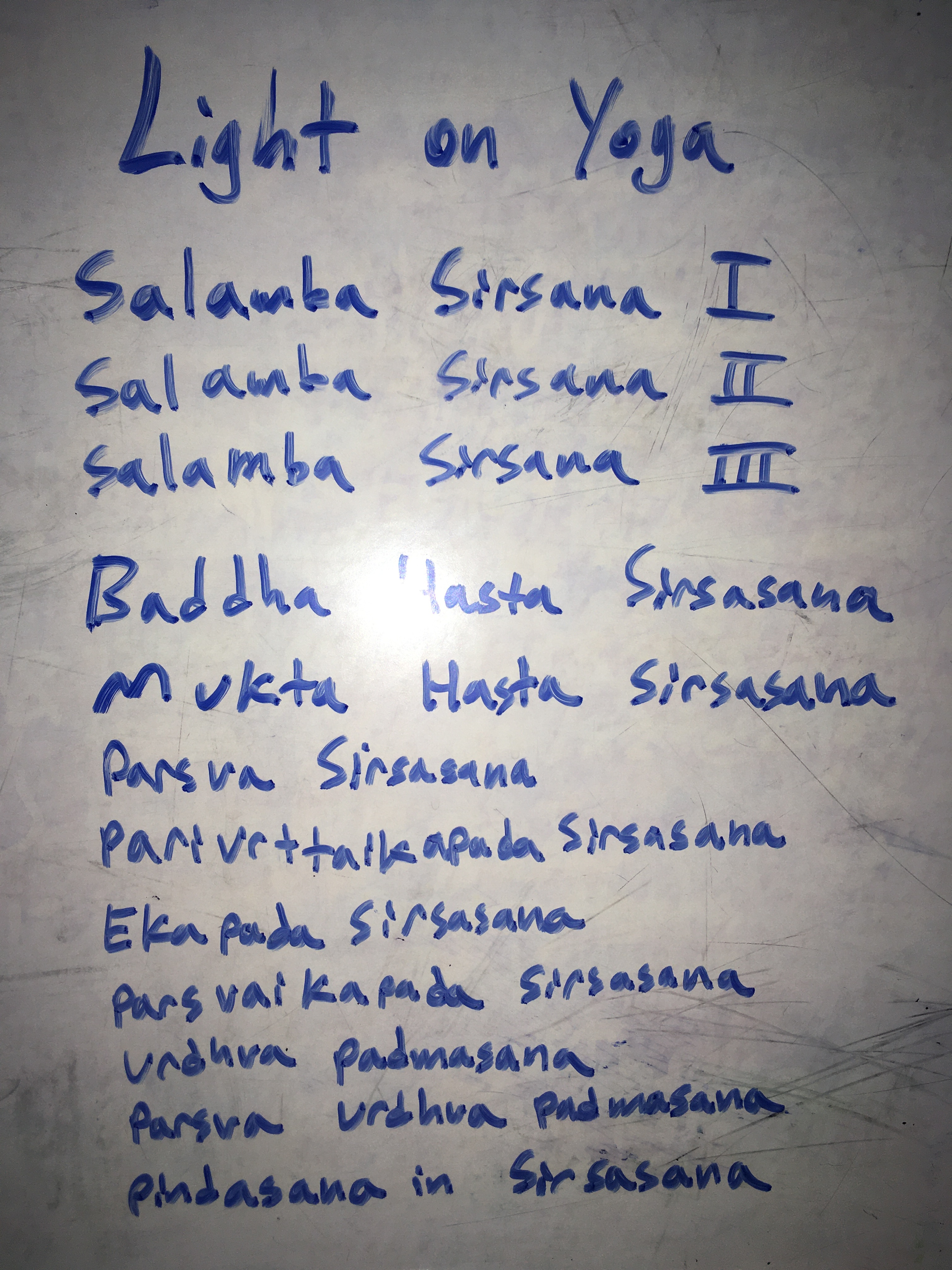
Every day, I post up photos of my whiteboard on Instagram (@nicnakis). These are my workout logs, and sometimes they say something about Yoga.

What do I get out of Yoga and why have I been practicing it for 25 years?

Mental Practice

I guess it starts with learning: learning strange names and words and stories, and purported effects, as well learning about the things my body can do if I push it. I learned the names of some muscles and joints, but more importantly I learned what things felt like in different positions, I learned an instinctual awareness of my body in space. I love information and awareness, so these things tickled my mind from those teenaged days of flipping through garage-sale Yoga books my mom brought home.

The other mental aspect is about relaxation and settling the mind. Yoga practice involves putting aside everything else, emptying the mind of desires and reactions, and focusing only on the breath and the positions of the body. One of my favorite Yoga practices has always been Savasana, which is basically just lying on your back with your eyes closed and pretending that you’re dead. This is a meditative practice of relaxing all the nerves and muscles in the body, of ignoring negative thoughts, letting tension or pain or worry leave you and sink into the ground. Then you rise up again.

Physical Practice

I touched on a little bit of this above. Yoga helps create awareness around the various parts of your body and how they interact with one another. If you’re in a forward bend or sitting on the ground holding your toes, you can feel that the tissues from the feet along the back of the legs, up the back and all the way through the neck to the head are all connected. You notice if it was easier to do a pose on one side of the body than it was on the other side, so you spend more time on the difficult side to balance things out. You become aware of posture and its effects on your movement and how you feel.

In a manner of speaking, every Yoga pose is like an isometric and a stretch at the same time. Isometrics are holds; a type of muscular contractions that hold the muscle(s) at a set length, rather than lengthening or shortening them. Stretching is working up against the elasticity of the muscle. I look at Yoga poses as if there is always one set of muscles in an isometric hold (becoming stronger), while the opposite set of tissues is stretched to become more pliable and relaxed. This helps me increase stability and balance in my body, while also creating a greater sense of openness and mobility.

Spiritual Practice

The other piece with Yoga is the spiritual piece. Physical Yoga like I’m talking about is only one of many forms of Yoga. There is also a Yoga of chanting, a Yoga of eating, and the Yoga of being a King (Raja Yoga), amongst others. Yoga is considered to be a spiritual science, not a religion in itself, but a “science of religions.” The word “Yoga” itself means “to unite”, signifying the unity of the human being to the divine. This is felt when one is able to control their body, their mind, and their will, and realize their true self to be independent of these.

Control of the breath is a big part of this. I have found that Yoga breathing exercises have helped me learn how to modulate my moods, to be aware of energetic changes in my person, and to have some degree of control over them. Yoga breathing can be relaxing or stimulating. There are times when my breath-awareness helps me in an athletic endeavor. Other times it helps me to calm down or get to sleep, to focus, or to concentrate. This practice and the self-awareness it brings provides tools that help me live better and be a better person to others.

Learn Something New Every Day

When we were kids, my brother and I created a lot of personal rules and orders. I’ve talked in this blog about our personal “health code” that we developed. There were many other vows, restrictions, and challenges we put on ourselves. For example, my brother vowed to make a new friend every day, and I vowed to learn something new every day.

Reading books is one way that I make sure to learn something new every day. These are just a few of the books that I’ve been reading (I’ve got at least 10 in my ‘current reading’ stacks scattered around the house).

OPEX CCP Textbooks

I completed my OPEX CCP (Coaching Certificate Program) in 2017. That was one of the pivotal moments in my life. I can’t say enough good things about this course and the education it provides for fitness coaches. At the time, there were 5 components: assessment, program design, nourishment, lifestyle coaching, and business systems. They’ve made changes and improvements to the course over the years, so I’ve actually re-done it a couple of times when they release new course videos and workbooks. Recently, they published a fantastic set of textbooks. These include a pre-course manual covering anatomy and physiology topics mostly, then a book about the coach (that’s me), the client (that’s you, potentially), and the professional (me again, but in another context).

The Liturgy of the Ethiopian Orthodox Tewahedo Church

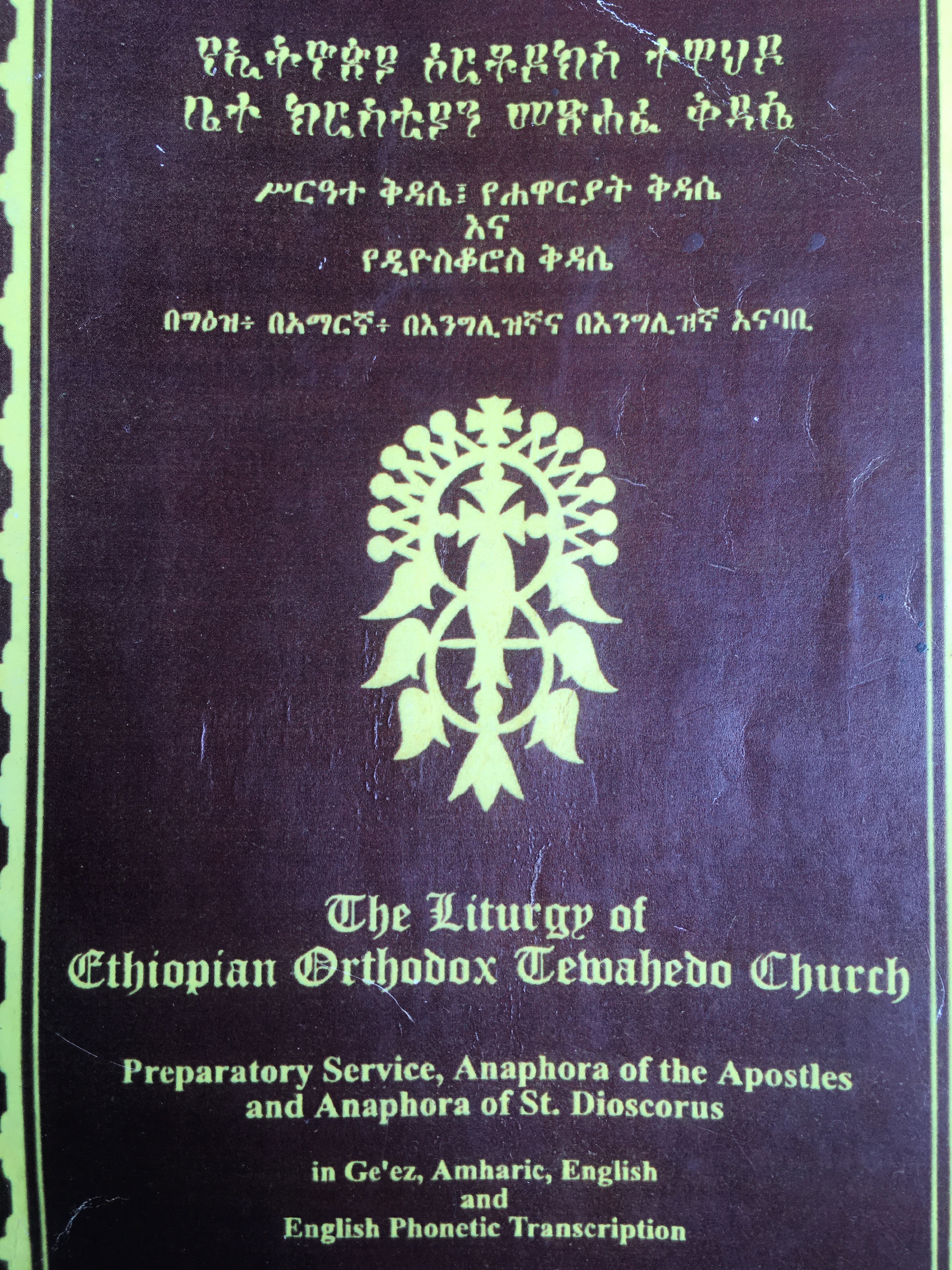
I first heard about the Ethiopian Orthodox Tewahedo Church in 2007 when I was living in Kenya. I spent a lot of time with the Rastafari brethren, who were abundant in the area outside of Mombasa where I was living at the time. They told me about Haile Selassie the First, about the ancient African history of Ethiopia, and about the Ethiopian Church. Later that year, I was back home in Seattle when I met an Ethiopian man in a parking lot and asked him if there were Ethiopian churches in Seattle. That Sunday I was in church from 5am to 5pm and I was mesmerized. There are a lot of long stories between that time and my baptism in Addis Ababa in 2018, but I’ll save those for later. Now I am attending services regularly and learning to chant the services out loud in Ge’ez and Amharic along with the congregation.

Gray’s Anatomy

Like a lot of people in recent times–I’d venture to guess–I didn’t know this was a book. I first heard about the TV show (entitled “Grey’s”). Soon after, I figured out the double entendre in that title when I learned there was a famous anatomy textbook with this name. I never watched the show, beyond a half an episode my wife was watching, but I did some work on the ABC/Disney series last summer and discovered that it wasn’t very scientific. I think the book is more my style. I’m the guy who always likes the book better than the show anyway. My mom picked up this one for me. It’s massive, with gold-fringed pages and awesome old-school illustrations. I don’t plan to read it cover to cover, but it is a handy reference tome.

Do I Need to Learn to Use Myofascial Release Tools?

If you’re doing it right, you won’t have to learn how to use this.

Here’s a common question that I get: “Should I buy a foam roller?”

And the answer, of course, is, “It depends.”

For most of my clients, I would say no, they don’t need to buy a foam roller. If they’re sleeping adequately, eating adequately, hydrating adequately, recovering well, and working out within their abilities and function, then there should be no reason to use this “active” recovery strategy.

Foam rollers and other tools of this nature are referred to as “self myofascial release tools”. I first got into these about 10 years ago and they were a game-changer for me. You see, I was sore all the time. I did hardcore, 1-hour CrossFit classes that included mobility work, strength work, and “metcons”. Plus, I did a ton of other workouts on my own, including frequent yoga, long bike rides, running outside in the parks, and lots of calisthenics. I was also eating poorly, sleeping poorly, and stressed-out from work. So, it made perfect sense that my body was all jacked-up and painful.

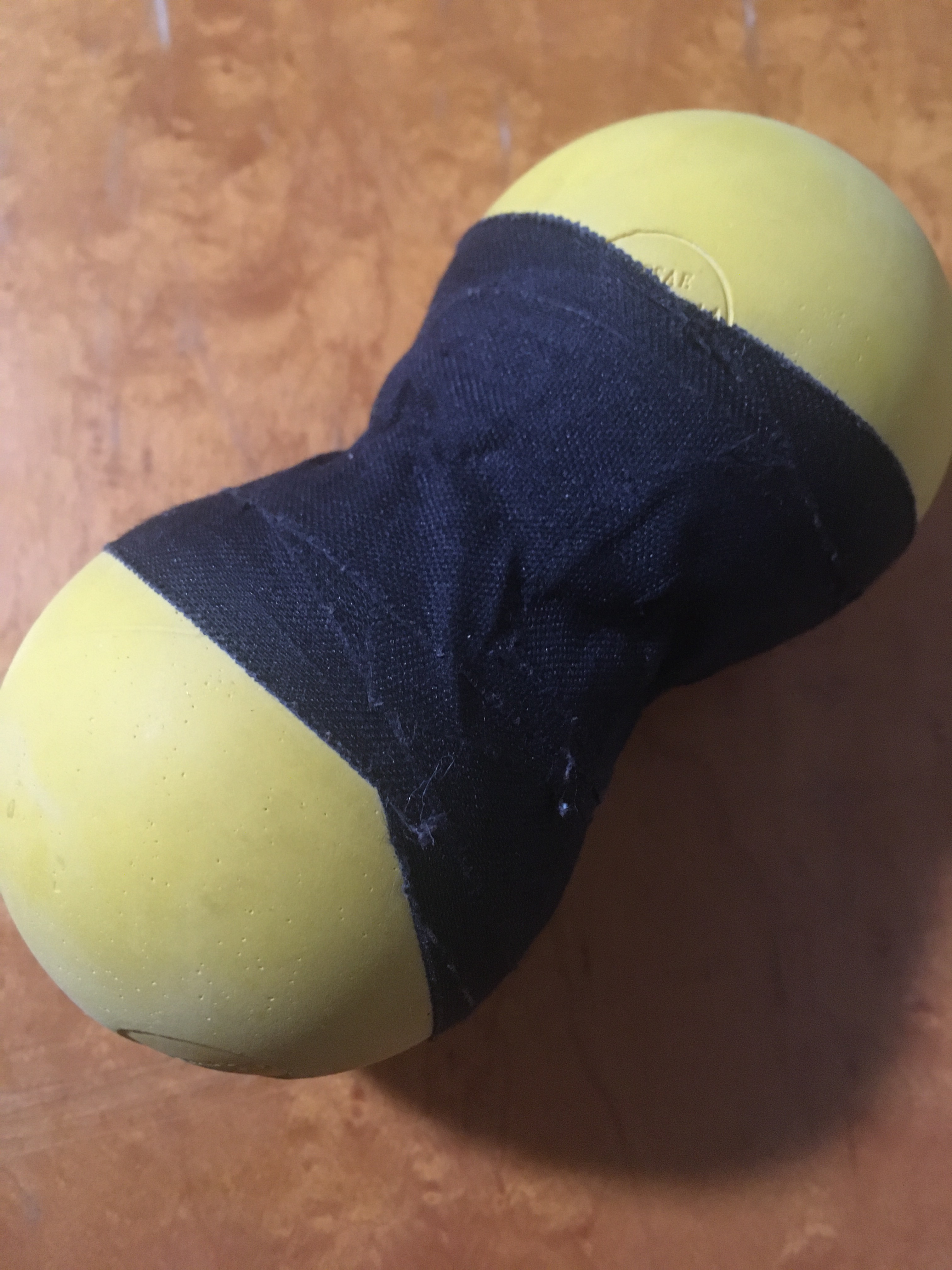
I would show up at the CrossFit gym 10-15 minutes early in order to foam roll all my stiff tissues so that they’d become pliable enough to allow me to beat them up again with another hard session. I was going so hard, in fact–sometimes two sessions a day–that I decided to invest in a whole suite of myofascial release tools. Now, it wasn’t just foam rollers, it was PVC pipe rollers, lacrosse balls, double lacrosse balls (pictured), softballs, hard medicine balls, tennis balls, golf balls, the tennis ball on the end of a stick, and the Theracane.

It’s no coincidence that during this same period of time I had a lot of injuries. I mean, between a couple of car accidents and several weightlifting/CrossFit injuries, I went through at least one major injury per year for about 8 years! No problem, I had my foam roller so I would be fine.

I hope maybe you’re starting to see the big picture here. The reason I was getting injured and feeling so jacked-up was completely tied to the “just foam roll it and go” mentality that I had. I was doing it all wrong.

My aches and pains–and therefore my dependency on myofascial release tools–didn’t actually go away until I fixed my lifestyle. I had to learn how to chew my food 42 times per bite so that my body would digest and absorb nutrients better. I had to learn how to wind down before bed, get a good night’s sleep, and wake up the same time every morning. I had to learn to drink more water and eat more colorful fruits and vegetables throughout the day. I had to learn how to make my bed every morning and keep the dishes in the sink clean. Most important of all, I had to learn to curtail my exercise activities within reason. I had to align my actual priorities and intentions around health and fitness with daily behaviors that supported my long-term goals. Then, like magic, I no longer needed to foam roll for an hour a day.

I have seen a similar story play out with a large number of clients over the years. Do foam rollers work? Yes, but why do you need them? You’re probably not recovering well enough by your basic, natural, everyday means (such as sleep, food, and water). You’re probably doing more than you should be, and probably doing things you don’t need to be, or have no business doing.

So, before you go and buy a foam roller or amass a collection of self-myofascial release tools, start by reining-in your workout routines, optimizing your natural recovery strategies of sleep, nutrition, and hydration, washing the dishes and paying your bills on time so you don’t feel so stressed out.

Time in the Trenches

Sometimes I meet people who have just gotten into CrossFit and they’re super gung-ho about it. (Or maybe they found CrossFit 5 years ago). They’ve watched a ton of stuff on YouTube and watched the CrossFit Games, maybe read a bunch of CrossFit Journal articles. They think know everything and they are unwilling to listen to reason. This is an archetype of a person I have met many, many times.

I just want to grab these people and shake them and say, “Listen!” “There are things that some half-cocked CF Journal article cannot teach you, but you can only learn through time in the trenches.”

You see that stack of journals? Those are 11 of my old training journals, and underneath them a bunch of printouts of workout programs with weights recorded on them. Every single page in that stack is a workout session. And that’s not including the years before that when I only recorded my workouts in the comments section on CrossFit.com, or the years after that when I’ve recorded my workouts in TrueCoach or on Instagram. That’s a lot of workouts.

What have all those workouts taught me? Slow down. Take your time. Have fun and enjoy the process. It’s better to do the minimum intensity for the maximum amount of time than it is to do the maximum intensity for a minimum amount of time. In other words, a 10-minute walk outside every morning for every day of your life until you’re in your 100s is a SUPERIOR fitness program to doing ass-kicking 1-hour high-intensity fitness classes for a couple years in your 20s, beating up your endocrine system, joints, and connective tissues, and then feeling like crap in your 30s.

Basically, I did CrossFit long enough (15 years) to learn not to do CrossFit. There are a lot of guys (and gals) like me out there. We will steer you in a better direction. We will talk to you about ideas like Basic Lifestyle Guidelines, proper intentions, and sustainability. We have made ourselves the Guinea Pigs in a giant experiment around health and fitness, performance vs. longevity. We have suffered so–hopefully–you won’t have to.

The best teacher is experience.

My Definition of Fitness

Here’s something that I’ve spent a lot of time thinking about and writing about: definitions of “fitness”. I named my business “Smart, Fit, and Clean”, which essentially summarizes my proposition for a definition of fitness. Wrote 3 weeks straight of blogs defining this in more detail. I hope it makes you think.

What does “Smart, Fit, and Clean” mean?

What is Fitness? Part 1: Defining the Question

What is Fitness? Part 2: Answering the Question for Yourself

What is Fitness? Part 3: Smart, Fit, and Clean

What is Fitness? Part 4: Smart = Mental Fitness

What is Fitness? Part 5: Fit = Physical Fitness

What is Fitness? Part 6: Clean = Spiritual Fitness

Smart, Part 1: Mental Health

Smart, Part 2: Intelligence

Smart, Part 3: Knowledge

Fit, Part 1: Endurance

Fit, Part 2: Strength

Fit, Part 3: Movement Ability

Clean, Part 1: Awareness of Self

Clean, Part 2: Awareness of Context

Clean, Part 3: Awareness of Eternity

7 Questions to Set Intentions

I spend a lot of time working to get better at my job. I’ve found that coaching is all about asking the right questions. This series of blogs laid out 7 questions that you can use as tools to refine your own intentions and create a plan of action.

The 7 Most Important Questions (In My Work)

Who Are You?

What Do You Want to Achieve?

Why Do You Want To Achieve It?

When Will You Achieve It?

Where Will You Achieve It?

How Will You Achieve It?

What Are You Going To Do Now?

3 Big Problems, 3 Big Solutions

Dealing with all the events of this year led me to some observations about what’s wrong in the world and how to fix it. A handful of blogs explored my ideas about these ‘3 big problems’ and ‘3 big solutions’.

3 Big Problems and 3 Big Solutions

Be Your Authentic Self

Live Your Most Vigorous Life

Eat Your Own Personalized Diet

All Power to All the People